 AW HOLDING
 Tel: +971 24912220
 sales@awprotranslations.com


[vc_row][vc_column][vc_custom_heading source=”post_title” font_container=”tag:h1|text_align:left”][vc_column_text]
Legal depositions are critical moments in any legal case. Every statement, clarification, and response can influence outcomes, legal strategies, and court decisions. When a language barrier exists, accuracy becomes even more crucial. That is why hiring a certified court interpreter for a legal deposition is not just recommended, it is essential.
In this article, we explain what a certified court interpreter is, why certification matters, the risks of using unqualified interpreters, and how AW PTS ensures reliable, court-ready legal interpretation.
What Is a Certified Court Interpreter?
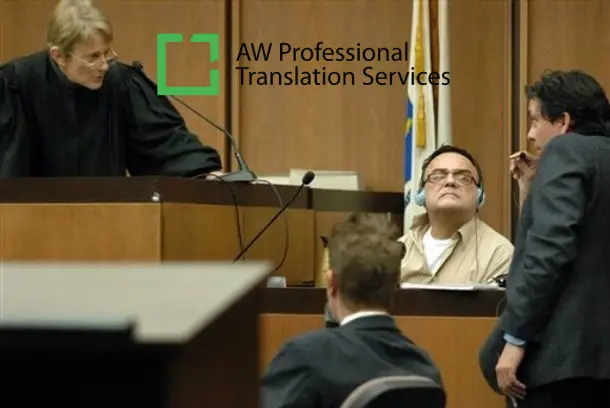 A certified court interpreter is a professionally trained and tested language expert who has demonstrated the ability to interpret legal proceedings accurately, ethically, and impartially.
Certification typically confirms that the interpreter:
-
Has advanced bilingual proficiency
-
Understands legal terminology and procedures
-
Can interpret accurately under pressure
-
Follows strict ethical and confidentiality standards
In legal depositions, where precision is mandatory, certification is a critical qualification.
Why Legal Depositions Require a Certified Court Interpreter
A legal deposition is sworn testimony taken outside the courtroom but used as official evidence. Any error, omission, or misinterpretation can have serious legal consequences.
1. Accuracy Is Legally Critical
A certified court interpreter ensures that every question and answer is conveyed faithfully, without additions, omissions, or distortions. This protects the integrity of the testimony.
2. Depositions Are Legally Binding
Statements made during depositions can be referenced in court. An inaccurate interpretation can:
-
Change the meaning of testimony
-
Create contradictions
-
Damage credibility
-
Lead to legal disputes
Using a certified court interpreter minimizes these risks.
3. Compliance with Legal Standards
Courts and law firms often require certified interpreters to ensure due process and protect the rights of all parties. Non-certified interpreters may not meet admissibility or procedural standards.
Risks of Using Non-Certified Interpreters
Hiring an unqualified interpreter for a legal deposition can result in:
-
Misinterpretation of legal terms
-
Inaccurate or incomplete testimony
-
Challenges to deposition validity
-
Case delays or re-depositions
-
Increased legal costs
These risks far outweigh the cost of hiring a professional certified court interpreter.
Key Skills of a Certified Court Interpreter
 A qualified certified court interpreter brings more than language fluency.
Legal Terminology Expertise
They understand complex legal concepts, procedural language, and jurisdiction-specific terminology.
Real-Time Accuracy
Depositions require fast, accurate interpretation without hesitation or clarification errors.
Ethical Neutrality
Certified interpreters remain impartial and never influence testimony.
Strict Confidentiality
All information shared during depositions is protected under professional confidentiality standards.
Learn how we manage Quality assurance in localization
Types of Interpretation Used in Legal Depositions
A certified court interpreter may provide:
-
Consecutive interpretation: The speaker pauses while interpretation is delivered
-
Simultaneous interpretation: Real-time interpretation when required
-
Sight translation: Reading and orally translating legal documents during the deposition
Each method requires advanced training and legal experience.
Why AW PTS Is the Right Choice for Certified Court Interpreters
AW PTS is a trusted provider of certified court interpreter services for legal depositions, courts, and law firms across multiple jurisdictions.
What Sets AW PTS Apart
-
Certified court interpreters with proven legal experience
-
Deep understanding of deposition procedures
-
Expertise in multilingual legal environments
-
Strict confidentiality and ethical compliance
-
On-site and remote deposition interpretation solutions
AW PTS ensures that interpretation meets the highest legal and professional standards.
Certified Court Interpreter Services for Law Firms and Courts
AW PTS supports:
-
Law firms
-
Corporate legal departments
-
Arbitration panels
-
Government and judicial institutions
Whether the deposition is in-person or remote, AW PTS provides certified court interpreters who are fully prepared for high-stakes legal environments.
Follow us on Linkedin for more info
Remote Depositions and Certified Court Interpreters
With the rise of virtual legal proceedings, certified interpretation is more important than ever. AW PTS delivers secure remote interpretation solutions while maintaining accuracy, confidentiality, and legal compliance.
Technology enhances access — but certification ensures trust.
Legal Interpretation vs. Legal Translation
It’s important to distinguish between the two:
-
Legal interpretation: Spoken, real-time communication (depositions, hearings)
-
Legal translation: Written legal documents
AW PTS offers both services, ensuring seamless legal communication from deposition to documentation.
Conclusion: Accuracy and Justice Depend on Certification
Hiring a certified court interpreter for a legal deposition protects the accuracy of testimony, the rights of all parties, and the integrity of the legal process. In high-stakes legal settings, there is no room for error.
By choosing AW PTS, you partner with a trusted legal language provider that understands the importance of precision, professionalism, and compliance.
When every word matters, trust a certified court interpreter from AW PTS.
Learn Data-driven localization strategy
FAQS about certified court interpreter
1. What is a certified court interpreter?
A certified court interpreter is a professionally trained and tested language expert qualified to interpret legal proceedings accurately, ethically, and impartially.
2. Why is a certified court interpreter required for legal depositions?
Legal depositions involve sworn testimony used as official evidence. A certified court interpreter ensures accuracy, legal compliance, and protects the integrity of the testimony.
3. What are the risks of using a non-certified interpreter in a deposition?
Using a non-certified interpreter can lead to misinterpretation, invalid testimony, legal disputes, case delays, and increased legal costs.
4. Are depositions legally binding?
Yes. Statements made during depositions can be used in court, making accurate interpretation critical to avoid contradictions or credibility issues.
5. What skills does a certified court interpreter have?
Certified court interpreters possess legal terminology expertise, real-time accuracy, ethical neutrality, and strict confidentiality compliance.