 AW HOLDING
 Tel: +971 24912220
 sales@awprotranslations.com


Common Translation and Localization Mistakes in UAE | AW PTS
The UAE is one of the most diverse and multilingual markets in the world. Businesses operating in this environment must communicate accurately and culturally with audiences from different backgrounds. Unfortunately, many companies fall into Common Translation and Localization Mistakes that reduce trust, impact compliance, and limit market success.
This article explains what translation and localization really mean, the most common mistakes in each, and how AW PTS helps businesses avoid them in the UAE market.
What Is Translation?
 Translation is the process of converting written content from one language into another while preserving the original meaning. In the UAE, translation is commonly required for:
-
Business documents
-
Legal and official materials
-
Websites and mobile applications
-
Marketing and corporate communications
Professional translation focuses on linguistic accuracy, terminology, and clarity.
Common Translation Mistakes in the UAE
1. Literal Word-for-Word Translation
Direct translation without context often produces unnatural or incorrect meaning, especially between English and Arabic.
2. Incorrect Terminology
Using inaccurate legal, financial, or technical terms can lead to misunderstandings or compliance risks.
3. Lack of Native Language Expertise
Non-native translators may miss nuances, tone, and local usage.
4. Ignoring Formal and Informal Language Levels
Arabic in the UAE often requires Modern Standard Arabic, not casual dialects.
5. Skipping Proofreading and Review
Unreviewed translations often contain grammatical or contextual errors.
What Is Localization?
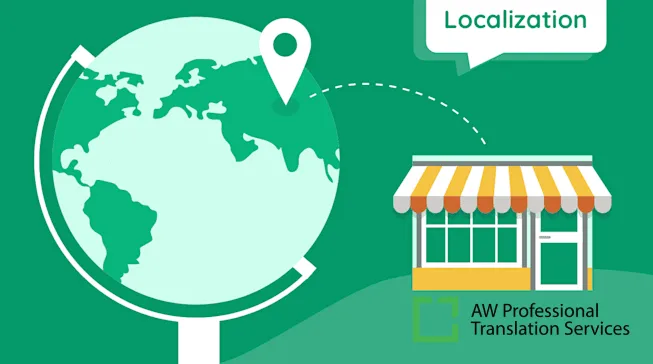 Localization goes beyond translation. It adapts content to the cultural, technical, and regulatory expectations of the target market. In the UAE, localization often includes:
-
Cultural tone and messaging
-
Right-to-left (RTL) layout adaptation
-
Local currency, dates, and units
-
Market-specific terminology
-
User experience adaptation
Localization ensures content feels natural and relevant—not foreign.
Learn about Ecommerce localization
Common Localization Mistakes in the UAE
1. Ignoring Cultural Sensitivities
Content that works in other regions may be inappropriate or ineffective in the UAE.
2. Poor Arabic RTL Layout Handling
Improper alignment, broken UI, and reversed layouts are common localization errors.
3. Inconsistent User Experience
Partially localized interfaces confuse users and reduce engagement.
4. Failure to Adapt Visual Elements
Icons, images, and colors may carry different meanings locally.
5. Overlooking Local Regulations
Certain industries require localized compliance language and formats.
Learn how we manage Quality assurance in localization
Translation vs Localization: Common Mistakes Comparison
| Area | Translation Mistakes | Localization Mistakes |
|---|---|---|
| Focus | Language accuracy only | Cultural and functional adaptation |
| Common Error | Literal wording | Cultural mismatch |
| Language Direction | Incorrect phrasing | Broken RTL layout |
| Terminology | Inconsistent terms | Market-inappropriate terms |
| User Experience | Understandable but awkward | Confusing or unnatural |
| Compliance Risk | Medium | High in regulated industries |
This table highlights why both translation and localization must be handled professionally in the UAE.
Learn about E-learning Localization
Why These Mistakes Are Costly in the UAE
Common Translation and Localization Mistakes can lead to:
-
Loss of customer trust
-
Regulatory or legal issues
-
Poor app or website performance
-
Brand credibility damage
-
Missed market opportunities
In a competitive UAE market, these mistakes directly impact revenue and growth.
How AW PTS Eliminates Translation and Localization Mistakes
 AW PTS provides professional translation and localization services tailored specifically for the UAE.
AW PTS Key Strengths:
-
Native Arabic and English linguists
-
UAE market and cultural expertise
-
Arabic RTL and UI localization specialists
-
Industry-specific terminology management
-
Multi-stage quality assurance
Every project is adapted linguistically, culturally, and technically.
Industries in the UAE That Require Error-Free Localization
AW PTS supports businesses across:
-
Legal and compliance
-
Technology and software
-
E-commerce and retail
-
Healthcare and education
-
Government and corporate sectors
Accuracy and localization excellence are essential in all these industries.
Learn Data-driven localization strategy
FAQs: Common Translation and Localization Mistakes in the UAE
What are the most common translation mistakes in the UAE?
The most common translation mistakes include literal word-for-word translation, incorrect terminology, lack of native language expertise, improper use of Arabic language levels, and skipping proofreading.
What is the difference between translation and localization?
Translation focuses on converting text from one language to another, while localization adapts content to cultural, technical, and regulatory requirements of the UAE market.
Why is localization important for the UAE market?
The UAE is culturally diverse and highly regulated. Localization ensures content aligns with cultural expectations, Arabic RTL formatting, local terminology, and compliance requirements.
What are common localization mistakes businesses make in the UAE?
Common localization mistakes include ignoring cultural sensitivities, poor RTL layout handling, inconsistent user experience, inappropriate visuals, and overlooking local regulations.
Can translation errors cause legal or compliance issues in the UAE?
Yes. Incorrect legal or regulatory translation can lead to misunderstandings, rejected documents, or legal consequences, especially in regulated industries.
Understanding and avoiding Common Translation and Localization Mistakes is essential for success in the UAE’s multilingual environment. Accurate translation ensures clarity, while effective localization ensures relevance and trust.
With proven expertise and deep UAE market knowledge, AW PTS helps businesses communicate flawlessly—without errors, confusion, or cultural risk.
Follow us on Linkedin for more info