12Feb

Book Translation and Localization Services | AW PTS Professional Services

In today’s global market, reaching readers in multiple languages requires more than just translation, it requires book translation and localization services. Whether you’re an author, publisher, or educational institution, adapting your book for international audiences ensures that the content resonates culturally, linguistically, and contextually.

AW PTS provides professional book translation and localization services, helping clients make their books accessible, engaging, and market-ready in any language.

What is Book Translation and Localization?
What is Book Translation and Localization?Book translation refers to converting the text of a book from one language to another while preserving meaning, tone, and style.
contact us aw pts

Book localization goes a step further. It adapts content to the cultural and regional context of the target audience. This includes:

  • Adapting idioms and expressions

  • Adjusting cultural references

  • Modifying examples or illustrations to fit local norms

  • Ensuring formatting and layout meet regional reading habits

By combining translation with localization, a book can connect with readers worldwide as if it were originally written in their language.

learn about :  Certificates translation 

Types of Books We Localize

At AW PTS, we handle all types of books, including:

Type of Book Translation & Localization Approach
Fiction Preserving narrative style, voice, and emotional tone
Non-Fiction Accurate technical or educational content with culturally relevant examples
Academic & Textbooks Maintaining terminology accuracy, adapting examples for local curriculum
Children’s Books Adjusting language, illustrations, and cultural references for age-appropriate localization
Cookbooks & Lifestyle Localizing measurements, ingredients, and cultural practices
Self-Help & Motivational Ensuring cultural relevance of metaphors and examples

The Book Translation and Localization Process

  1. Initial Assessment
    Review the source material to understand content type, tone, target audience, and localization requirements.

  2. Translation
    Experienced translators convert the text into the target language while preserving the author’s style and meaning.

  3. Cultural Localization
    Adapt cultural references, idioms, humor, and examples for the target audience to ensure authenticity.

  4. Editing and Proofreading
    Linguistic and technical review to ensure the translated text is error-free and culturally accurate.

  5. Formatting & Desktop Publishing
    Adjust the layout, images, and design to match the original book or improve readability in the target language.

  6. Quality Assurance
    Final review to check consistency, style, and correctness before delivery.

Learn about : Medical translation 

Common Challenges in Book Translation

  • Common Challenges in Book TranslationMaintaining author’s tone and style

  • Preserving literary devices and metaphors

  • Adapting cultural references without losing meaning

  • Handling technical terminology in non-fiction or academic books

  • Ensuring proper layout and formatting in multi-language versions

AW PTS addresses these challenges with certified translators and localization experts to produce professional, high-quality results.

Why Choose AW PTS for Book Translation and Localization?

  • MOJ and ISO Certified: Ensuring legal and professional standards.

  • Experienced Translators: Specialists in literary, academic, and technical texts.

  • All Languages Supported: Global coverage for any target audience.

  • Full-Service Localization: From translation to editing, formatting, and publishing.

  • Culturally Relevant Adaptations: Books that truly resonate with the local readers.

Whether it’s a novel, educational textbook, or professional guide, AW PTS ensures your book reaches global readers without losing its essence.

contact us aw pts

FAQs 

What is book translation and localization?

Book translation converts the text of a book into another language while preserving meaning, tone, and style. Localization adapts the content to the cultural, linguistic, and regional context of the target audience.

Which types of books can be localized?

  • Fiction: Preserves narrative style, voice, and emotional tone.

  • Non-Fiction: Maintains accuracy and culturally relevant examples.

  • Academic & Textbooks: Adapts terminology and examples to local curricula.

  • Children’s Books: Adjusts language, illustrations, and cultural references.

  • Cookbooks & Lifestyle: Localizes measurements, ingredients, and practices.

  • Self-Help & Motivational: Ensures cultural relevance of metaphors and examples.

What is the process of book translation and localization?

  1. Initial Assessment: Review content, tone, and target audience.

  2. Translation: Convert text while preserving meaning and style.

  3. Cultural Localization: Adapt idioms, humor, and examples.

  4. Editing and Proofreading: Ensure linguistic and technical accuracy.

  5. Formatting & Desktop Publishing: Adjust layout, images, and design.

  6. Quality Assurance: Final review for consistency and correctness.

What challenges are faced in book translation?

  • Maintaining the author’s tone and style

  • Preserving literary devices and metaphors

  • Adapting cultural references without losing meaning

  • Handling technical terminology

  • Ensuring proper layout in multi-language versions

Why choose AW PTS for book translation and localization?

  • MOJ and ISO certified for legal and professional standards

  • Experienced translators specializing in literary, academic, and technical texts

  • Support for all languages globally

  • Full-service localization including translation, editing, formatting, and publishing

  • Culturally relevant adaptations for target readers

Conclusion

Book translation and localization is more than just converting words, it’s about delivering a story, knowledge, or message that speaks to readers in their language and culture.

With AW PTS, authors and publishers can expand their audience, increase engagement, and achieve international success through expert book translation and localization services.

Follow us on Linkedin for more info 
11Feb

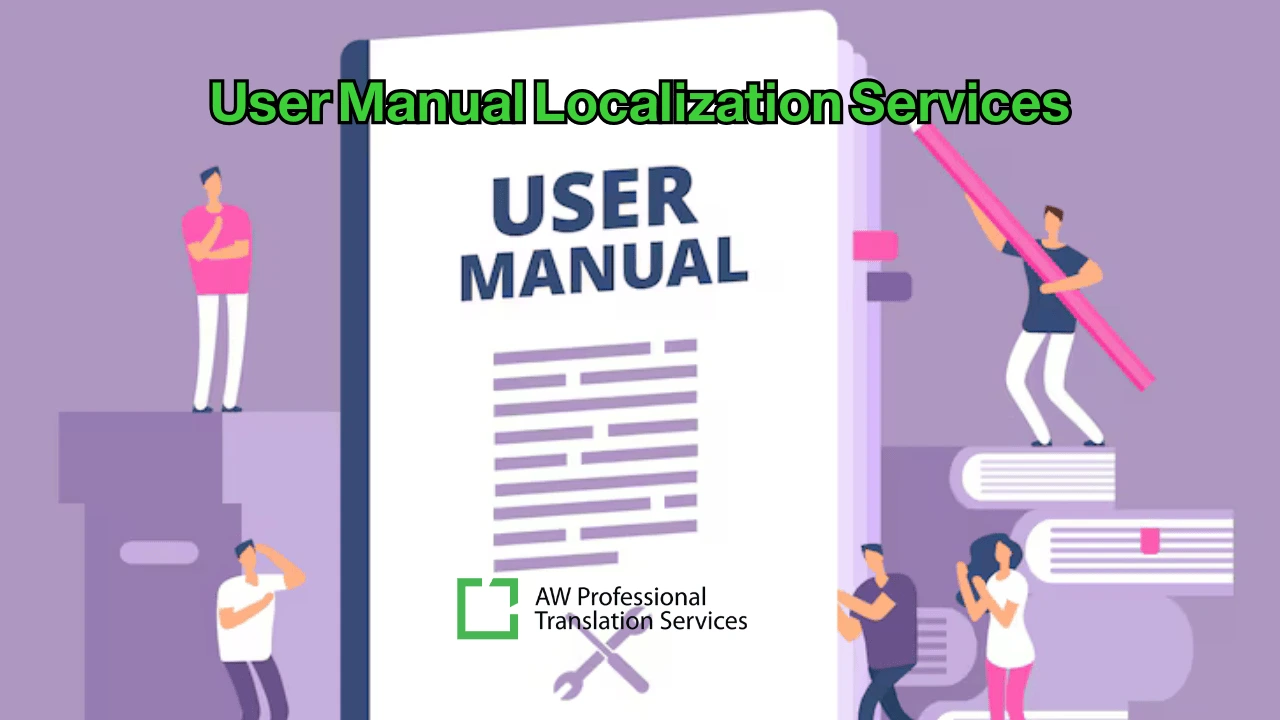
User Manual Localization Services | Accurate Manuals –AW PTS

As products reach global markets, clear and accurate documentation becomes just as important as the product itself. User manual localization ensures that instructions, safety guidelines, and technical information are adapted linguistically and culturally for users in different regions.

This article explains what user manual localization is, why it matters, how the process works, common challenges, and why AW PTS is the best choice for professional user manual localization services.

What Is User Manual Localization?

What Is User Manual Localization?User manual localization is the process of adapting product manuals from one language into another while considering cultural, technical, legal, and regional requirements. It goes beyond direct translation to ensure the content is clear, compliant, and user-friendly for the target market.

This includes:

  • Language adaptation

  • Cultural references and tone

  • Units of measurement

  • Symbols, icons, and visuals

  • Legal and safety terminology

The goal is to make the manual feel as if it were originally written for the local audience.

contact us aw pts

Why User Manual Localization Is Essential

Poorly localized user manuals can cause confusion, product misuse, safety risks, and legal exposure. Professional user manual localization helps businesses:

  • Improve user experience and satisfaction

  • Reduce product returns and support requests

  • Ensure compliance with local regulations

  • Enhance brand credibility

  • Minimize liability and safety risks

In global markets, a clear manual is a competitive advantage.

Learn about : Software localization 

Industries That Rely on User Manual Localization

User manual localization is essential across many industries, including:

  • Consumer electronics

  • Medical devices

  • Industrial machinery

  • Automotive products

  • Software and SaaS platforms

  • Home appliances

  • Telecommunications equipment

Each industry requires specialized terminology and regulatory awareness.

Learn about : Game localization 

The User Manual Localization Process

A professional user manual localization workflow typically includes:

1. Content Analysis and Preparation

Reviewing the source manual, identifying technical terminology, visuals, and regulatory requirements.

2. Terminology Management

Creating or applying approved glossaries to ensure consistency across all sections of the manual.

3. Professional Localization

Translating and culturally adapting the content for the target market, not just word-for-word translation.

4. Visual and Layout Adaptation

Adjusting diagrams, screenshots, icons, units, and formatting to match local expectations.

5. Quality Assurance and Review

Linguistic review, technical validation, and consistency checks.

6. Final Delivery

Providing the localized manual in the required format (PDF, print-ready, digital, or web-based).

Common Challenges in User Manual Localization

Common Challenges in User Manual LocalizationSome common issues businesses face include:

  • Complex technical language

  • Safety and compliance requirements

  • Inconsistent terminology

  • Poorly structured source content

  • Formatting and layout constraints

These challenges require expert handling to avoid costly errors.

User Manual Localization vs. Translation

While translation focuses on language accuracy, user manual localization ensures:

  • Cultural relevance

  • Legal compliance

  • Clarity for end users

  • Local standards and measurements

Localization transforms the manual into a market-ready document.

How AW PTS Delivers Expert User Manual Localization

AW PTS provides professional user manual localization services tailored to global businesses and regulated industries.

Why Choose AW PTS?

  • Experienced technical and industry-specific linguists

  • Multilingual localization for global markets

  • Consistent terminology management

  • Compliance-focused localization

  • Quality assurance at every stage

  • Ability to localize manuals into multiple languages

AW PTS ensures your manuals are accurate, clear, and ready for international use.

Learn : E-commerce Localization 

Benefits of Working with AW PTS

By choosing AW PTS for user manual localization, businesses gain:

  • Reduced customer support costs

  • Improved product usability

  • Faster market entry

  • Stronger brand trust

  • Lower legal and safety risks

Professional localization protects both users and manufacturers.

contact us aw pts

FAQs

What is user manual localization?

User manual localization is the process of adapting product manuals for different languages and regions while considering cultural, technical, legal, and regulatory requirements. It goes beyond translation to ensure clarity, compliance, and usability for local users.

How is user manual localization different from translation?

Translation focuses mainly on converting text from one language to another, while user manual localization adapts content to local standards, measurements, cultural expectations, visuals, and legal terminology to make the manual market-ready.

Why is user manual localization important for global products?

User manual localization improves user understanding, reduces misuse and safety risks, ensures regulatory compliance, lowers customer support costs, and enhances brand credibility in international markets.

Which industries need user manual localization the most?

Industries such as consumer electronics, medical devices, industrial machinery, automotive, software and SaaS, home appliances, and telecommunications rely heavily on professional user manual localization.


Conclusion

User manual localization is a critical component of successful global product distribution. Clear, culturally adapted, and compliant manuals help users understand products correctly and safely, no matter where they are.

With expert processes, industry knowledge, and multilingual capabilities, AW PTS delivers user manual localization solutions that help businesses succeed in international markets with confidence.

Follow us on Linkedin for more info 

10Feb

How to Become an Interpreter | Requirements, Skills & Career Path with AW PTS

The demand for professional interpreters is growing rapidly across industries such as healthcare, legal services, business, diplomacy, and international conferences. If you are bilingual or multilingual and interested in a language-focused career, you may be wondering how to become an interpreter and what steps are required to enter this profession.

This guide explains what an interpreter is, the skills and qualifications needed, the step-by-step process to become one, and how you can build a successful career,  including opportunities to join the AW PTS team.

What Is an Interpreter?

What Is an Interpreter?An interpreter is a language professional who converts spoken or signed communication from one language to another in real time, ensuring that the original meaning, tone, and intent are accurately conveyed.

Unlike translators, who work with written text, interpreters deal with spoken communication in live settings such as:

  • Conferences and events

  • Courtrooms

  • Hospitals and clinics

  • Business meetings

  • Phone and video calls

contact us aw pts

Types of Interpretation

Before learning how to become an interpreter, it’s important to understand the main interpretation types:

Each type requires specific training and skills.

Learn about : interpretation types in law 

Why Choose a Career as an Interpreter?

Why Choose a Career as an Interpreter?Becoming an interpreter offers many advantages, including:

  • Global career opportunities

  • Work across multiple industries

  • Competitive income potential

  • Flexible work models (freelance or full-time)

  • Continuous professional growth

This makes learning how to become an interpreter a valuable career investment.

Learn about Types of Interpretation in Communication

Key Requirements to Become an Interpreter

1. Strong Language Proficiency

The most basic requirement is native or near-native fluency in at least two languages.

You must be able to:

  • Understand different accents and dialects

  • Speak clearly and confidently

  • Convey meaning accurately without omissions

2. Excellent Listening and Memory Skills

Interpreters must process information quickly.

Key abilities include:

  • Active listening

  • Short-term memory retention

  • Fast comprehension and response

These skills are especially critical in consecutive and simultaneous interpretation.

3. Cultural Awareness

Language is deeply connected to culture.

Professional interpreters must understand:

  • Cultural references and idioms

  • Formal vs. informal speech

  • Social and professional norms

This ensures accurate and culturally appropriate communication.

4. Specialized Training or Education

While not always mandatory, professional training greatly improves credibility.

Common options include:

  • Interpretation courses or diplomas

  • Linguistics or language degrees

  • Specialized legal or medical interpretation training

Training helps you master techniques, ethics, and industry standards.

5. Certification (When Required)

Certain sectors require official certification.

Examples include:

  • Court interpreter certification

  • Medical interpreter certification

  • Conference interpretation credentials

Certification boosts employability and trust.

6. Strong Ethics and Confidentiality

Interpreters must follow strict professional ethics, including:

  • Confidentiality

  • Accuracy and neutrality

  • Professional conduct

This is essential in legal, medical, and corporate environments.

Step-by-Step Guide: How to Become an Interpreter

Step-by-Step Guide: How to Become an InterpreterStep 1: Assess Your Language Skills

Ensure you have professional-level fluency in both source and target languages.

Step 2: Choose Your Interpretation Field

Decide whether you want to work in:

  • Legal interpretation

  • Medical interpretation

  • Business and corporate settings

  • Conferences and events

  • Remote interpretation services

Specialization increases demand and income.

Step 3: Get Professional Training

Enroll in interpretation programs or workshops to learn:

  • Note-taking techniques

  • Memory enhancement

  • Interpretation strategies

  • Ethical standards

Step 4: Gain Practical Experience

Start building experience through:

  • Internships

  • Volunteer interpretation

  • Entry-level assignments

  • Shadowing professional interpreters

Experience is key to mastering real-world scenarios.

Step 5: Obtain Certifications (If Needed)

Certifications help you:

  • Qualify for specialized roles

  • Increase credibility

  • Access higher-paying opportunities

Step 6: Build a Professional Profile

Create:

  • A strong CV

  • Language and certification listings

  • Industry-specific experience highlights

This helps agencies and clients evaluate your expertise.

Step 7: Apply to Professional Interpretation Agencies

Partnering with a reputable agency gives you:

  • Consistent job opportunities

  • Professional support

  • Access to international clients

Common Challenges New Interpreters Face

When learning how to become an interpreter, be prepared for:

  • High mental concentration

  • Stressful environments

  • Fast-paced communication

  • Industry-specific terminology

With training and experience, these challenges become manageable.

contact us aw pts

Why Work With a Professional Interpretation Agency?

Working with a trusted agency offers:

  • Stable assignments

  • Fair compensation

  • Professional development

  • Ethical working standards

This is where AW PTS comes in.

Join the AW PTS Interpretation Team

AW PTS is a leading provider of professional interpretation services, supporting clients across legal, medical, corporate, and international sectors.

Why Join AW PTS?

  • Work with global clients

  • Access diverse interpretation projects

  • Professional support and quality standards

  • Opportunities for career growth

  • Ethical and transparent collaboration

If you are exploring how to become an interpreter or already have experience, you can apply to join the AW PTS team and grow your career with a trusted interpretation services provider.

FAQs

What does an interpreter do?

An interpreter converts spoken or signed communication from one language to another in real time, ensuring accuracy in meaning, tone, and intent across settings such as courts, hospitals, conferences, and business meetings.

What qualifications do I need to become an interpreter?

To become an interpreter, you need strong bilingual or multilingual proficiency, excellent listening and memory skills, cultural awareness, and professional training. Certifications may be required for legal or medical interpretation.

Do I need certification to become an interpreter?

Certification is not always mandatory, but it is often required for court, medical, and conference interpretation. Certified interpreters usually have better job opportunities and higher earning potential.

How long does it take to become a professional interpreter?

The timeline varies depending on language proficiency, training, and specialization. It can take several months to a few years to complete training, gain experience, and obtain certifications if required.

What skills are most important for interpreters?

Key skills include advanced language fluency, active listening, strong memory, concentration, cultural competence, note-taking techniques, and strict adherence to professional ethics.

What types of interpretation can I specialize in?

Common specializations include simultaneous interpretation, consecutive interpretation, court and legal interpretation, medical interpretation, over-the-phone interpretation (OPI), and video remote interpretation (VRI).


Final Thoughts

Understanding how to become an interpreter involves more than speaking two languages. It requires training, cultural awareness, ethical standards, and continuous skill development. With the right preparation and professional partnerships, interpretation can be a rewarding and long-term career.

If you’re ready to take the next step, AW PTS welcomes qualified interpreters to join its growing global team and be part of impactful multilingual communication worldwide.

Follow us on Linkedin for more info 

09Feb

Why Businesses Need Desktop Publishing Services | AW PTS

In today’s global and content-driven business environment, how information looks is just as important as what it says. From legal documents and technical manuals to marketing brochures and multilingual reports, formatting errors can damage credibility, delay approvals, and create compliance risks. This is exactly why businesses need desktop publishing services.

Professional Desktop Publishing (DTP) ensures that documents are visually accurate, consistent, and fully aligned with brand and regulatory requirements, especially when content is translated into multiple languages.

What Are Desktop Publishing Services?

What Are Desktop Publishing Services?Desktop Publishing services involve formatting, layout design, and document structuring using specialized software such as Adobe InDesign, Illustrator, FrameMaker, and Microsoft publishing tools.

Professional DTP services cover:

  • Text alignment and layout

  • Font consistency and typography

  • Table, chart, and graphic formatting

  • Multilingual layout adaptation

  • File preparation for print and digital use

Learn about E-learning Localization

Why Businesses Need Desktop Publishing Services

Understanding why businesses need desktop publishing services starts with recognizing the risks of poorly formatted documents.

contact us aw pts

1. Brand Consistency Across All Documents

Professional DTP ensures:

  • Uniform fonts, spacing, and styles

  • Consistent branding across markets

  • High-quality visual presentation

Inconsistent formatting can weaken brand trust—especially for international companies.

2. Support for Multilingual Content

When content is translated:

  • Text expansion or contraction occurs

  • Layouts often break

  • Fonts may not support target languages

This is one of the biggest reasons businesses need professional desktop publishing services, especially for multilingual projects.

3. Accuracy in Legal and Technical Documents

For industries such as:

  • Legal

  • Financial

  • Medical

  • Engineering

Even small formatting errors can lead to:

  • Misinterpretation

  • Compliance violations

  • Costly revisions

Professional DTP preserves structure and meaning.

4. Time and Cost Efficiency

In-house teams often:

  • Lack advanced DTP tools

  • Spend excessive time fixing layouts

  • Create rework after translation

Professional DTP reduces turnaround time and eliminates repeated corrections.

Learn : Why you should hire a court interpreter 

5. Print-Ready and Digital-Ready Output

Professional desktop publishing services ensure:

  • Print-ready files with correct margins and bleed

  • Optimized PDFs for digital platforms

  • Compatibility with different devices and formats

Desktop Publishing vs Basic Formatting

Aspect Basic Formatting Professional DTP
Tools Word or basic editors InDesign, FrameMaker, Adobe Suite
Multilingual support Limited Full language compatibility
Layout accuracy Basic Precision-level
Compliance readiness Low High

This comparison clearly shows why businesses need desktop publishing services.

Industries That Benefit Most from DTP Services

Industries That Benefit Most from DTP ServicesProfessional DTP is essential for:

  • Translation and localization projects

  • Legal contracts and court filings

  • Financial reports and audits

  • Technical manuals and user guides

  • Marketing and sales materials

The Role of Desktop Publishing in Localization

Localization goes beyond translation. It requires:

  • Cultural layout adaptation

  • Language-specific typography

  • Region-specific formatting standards

This makes DTP a core component of professional localization workflows.

Why Choose AW PTS for Desktop Publishing Services?

AW PTS provides professional desktop publishing services designed to support translation, localization, and multilingual communication projects.

AW PTS DTP Capabilities:

  • Multilingual DTP for complex scripts

  • Support for legal, technical, and marketing files

  • Seamless integration with translation workflows

  • High-quality print and digital outputs

  • Fast turnaround with strict quality control

AW PTS ensures your documents look as professional as they read.

Business Benefits of Working with AW PTS

Choosing AW PTS means:

  • Reduced project delays

  • Fewer formatting errors

  • Consistent global branding

  • Improved client and stakeholder confidence

  • Scalable DTP support for growing businesses

contact us aw pts

FAQs

What are professional desktop publishing services?

Professional desktop publishing services focus on document layout, formatting, and design using specialized tools to ensure accuracy, consistency, and print- or digital-ready output, especially for complex or multilingual content.

Why do businesses need professional desktop publishing services?

Businesses need professional DTP services to maintain brand consistency, avoid formatting errors, support multilingual content, meet compliance requirements, and ensure documents look professional across all markets.

How do desktop publishing services support translation and localization?

During translation, text length and language structure change. Professional DTP adapts layouts, fonts, and formatting to ensure translated content fits correctly and remains visually accurate.

What types of documents require desktop publishing services?

Common documents include legal contracts, financial reports, technical manuals, marketing brochures, training materials, and multilingual corporate documents.

What is the difference between basic formatting and professional DTP?

Basic formatting uses simple tools and offers limited control, while professional DTP uses advanced software to deliver precise layouts, multilingual compatibility, and compliance-ready documents.

Which industries benefit most from professional DTP services?

Legal, financial, medical, engineering, manufacturing, marketing, and translation-focused businesses benefit the most from professional desktop publishing services.

Conclusion

So, why businesses need professional desktop publishing services comes down to accuracy, consistency, and credibility. In a competitive and multilingual business landscape, professionally formatted documents are no longer optional—they are essential.

With AW PTS, businesses gain reliable desktop publishing services that enhance communication, protect brand image, and support global growth.

Follow us on Linkedin for more info 

08Feb

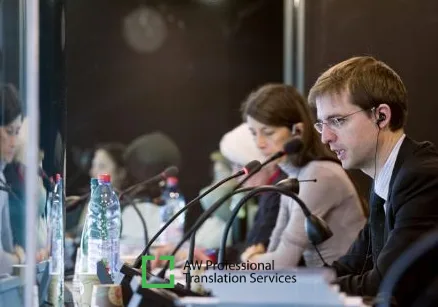
What Is Consecutive Interpretation? | guide AW PTS

In many professional settings, clear and accurate communication is essential, especially when participants speak different languages. One of the most commonly used interpretation methods in such situations is consecutive interpretation.

This article explains what is consecutive interpretation, how it works, where it is used, its benefits, and why professional consecutive interpretation services from AW PTS are essential for effective multilingual communication.

What Is Consecutive Interpretation?

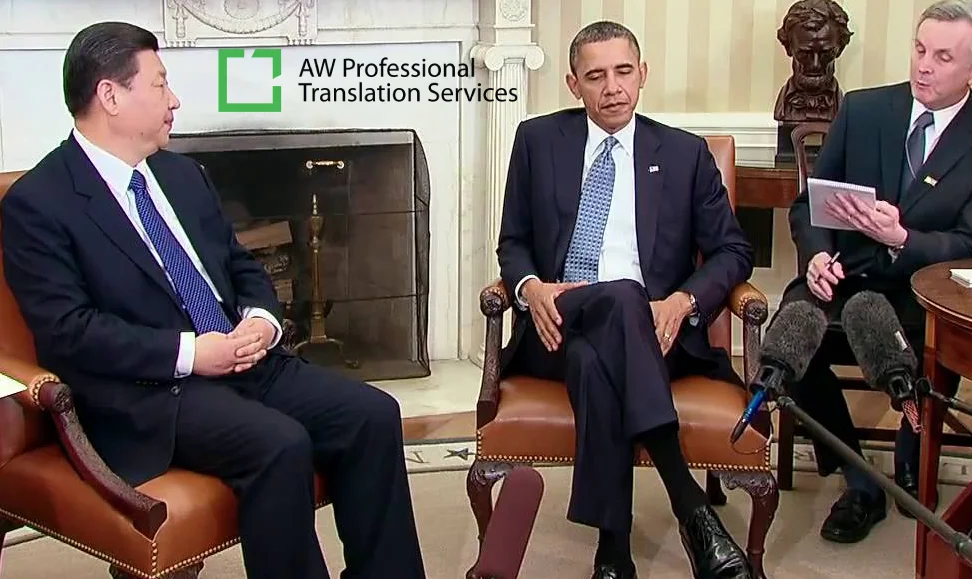
What Is Consecutive Interpretation?Consecutive interpretation is a type of oral interpretation where the speaker talks for a short period and then pauses, allowing the interpreter to translate the message into the target language.

Unlike simultaneous interpretation, the interpreter speaks after the speaker finishes a segment of speech. This method ensures high accuracy and is ideal for situations that require clarity, detail, and interaction.

contact us aw pts

How Consecutive Interpretation Works

The consecutive interpretation process typically follows these steps:

  1. Speaker Delivers a Segment
    The speaker talks for a few sentences or minutes.

  2. Interpreter Takes Notes
    The interpreter listens carefully and takes structured notes.

  3. Interpreter Delivers the Interpretation
    The message is accurately conveyed in the target language.

  4. Process Repeats
    The speaker continues, and the interpretation follows after each segment.

This method allows interpreters to fully understand context and meaning before translating.

Learn about : interpretation types in law 

The Consecutive Interpretation Process (Step by Step)

Understanding what is consecutive interpretation is not complete without knowing how the process works in real professional settings. The consecutive interpretation process is structured to ensure accuracy, clarity, and full message delivery.

1. Pre-Session Preparation

Before the session starts, the interpreter:

  • Reviews the subject matter and agenda

  • Studies relevant terminology (legal, medical, business, etc.)

  • Aligns with the client on language pairs and objectives

This preparation phase is critical for high-quality consecutive interpretation services.

2. Speaker Delivers a Segment

The speaker talks for a short segment, usually:

  • A few sentences

  • One or two minutes

  • A complete idea or thought

The speaker then pauses to allow interpretation.

3. Active Listening and Note-Taking

During the speech segment, the interpreter:

  • Listens attentively to meaning, tone, and intent

  • Takes structured notes using professional note-taking techniques

  • Focuses on key points, numbers, names, and technical terms

This step ensures nothing important is lost.

4. Interpretation Delivery

After the speaker pauses, the interpreter:

  • Delivers the full message accurately in the target language

  • Maintains the original tone, intent, and context

  • Uses clear and professional language

Accuracy is prioritized over speed at this stage.

5. Clarification if Needed

If something is unclear, the interpreter may:

  • Ask for clarification professionally

  • Confirm technical terms or figures

This step helps avoid misunderstandings, especially in legal or medical settings.

6. Continuation of the Session

The process repeats:

  • Speaker continues with the next segment

  • Interpreter listens, notes, and interprets

  • Communication flows smoothly until the session ends

Why the Process Matters in Consecutive Interpretation Services

Why the Process Matters in Consecutive Interpretation ServicesA well-managed consecutive interpretation process:

  • Ensures maximum accuracy

  • Reduces miscommunication risks

  • Preserves legal and professional integrity

  • Supports effective two-way communication

This is why professional consecutive interpretation services are essential, especially in high-stakes environments.

Understanding what is consecutive interpretation is not complete without knowing how the process works in real professional settings. The consecutive interpretation process is structured to ensure accuracy, clarity, and full message delivery.

Learn about : Over the Phone Interpretation UAE

Where Is Consecutive Interpretation Used?

Consecutive interpretation services are commonly used in:

  • Business meetings and negotiations

  • Legal consultations and court-related discussions

  • Medical appointments and patient interviews

  • Training sessions and workshops

  • Press interviews and media briefings

  • Small conferences and seminars

Benefits of Consecutive Interpretation

Understanding what is consecutive interpretation also means recognizing its advantages:

  • High level of accuracy

  • Clear and structured communication

  • Ideal for technical, legal, and medical content

  • Requires minimal technical equipment

  • Allows direct interaction between parties

Consecutive vs Simultaneous Interpretation

Aspect Consecutive Interpretation Simultaneous Interpretation
Timing After the speaker pauses Real-time
Equipment Minimal Booths & headsets
Best for Meetings & interviews Conferences & large events
Accuracy Very high High, but time-sensitive

Consecutive Interpretation Services by AW PTS

AW PTS provides professional consecutive interpretation services tailored to business, legal, and institutional needs. With experienced interpreters and strict quality standards, AW PTS ensures:

  • Highly trained and certified interpreters

  • Support for multiple languages

  • Expertise across legal, medical, and corporate sectors

  • On-site and remote interpretation options

  • Confidential and accurate communication

AW PTS helps organizations communicate clearly, confidently, and professionally.

When Should You Choose Consecutive Interpretation?

Consecutive interpretation is ideal when:

  • Accuracy is more important than speed

  • The audience is small or medium-sized

  • Two-way communication is required

  • Technical or legal details must be precise

contact us aw pts

FAQs

What is consecutive interpretation?

Consecutive interpretation is a method where the speaker pauses after a short segment, allowing the interpreter to translate the message into another language. This ensures high accuracy and preserves context and tone.

How does consecutive interpretation work?

The process involves the speaker delivering a segment, the interpreter actively listening and taking notes, then conveying the message accurately in the target language. This cycle repeats throughout the session.

When should I use consecutive interpretation instead of simultaneous interpretation?

Consecutive interpretation is ideal when accuracy is crucial, the audience is small to medium, technical or legal details must be precise, or two-way communication is required.

Where is consecutive interpretation commonly used?

It is widely used in business meetings, legal consultations, court proceedings, medical appointments, training sessions, workshops, and small conferences.

What are the benefits of consecutive interpretation?

  • High level of accuracy

  • Clear and structured communication

  • Minimal technical equipment required

  • Suitable for technical, legal, and medical content

  • Enables direct interaction between participants

What is the difference between consecutive and simultaneous interpretation?

  • Consecutive Interpretation: Interpreter speaks after the speaker pauses; best for small meetings, interviews, and technical discussions.

  • Simultaneous Interpretation: Interpreter speaks in real time; suitable for large conferences and multilingual events.

Conclusion

So, what is consecutive interpretation? It is a highly effective interpretation method that delivers accuracy, clarity, and meaningful communication by allowing the interpreter to translate after the speaker pauses.

For organizations that require reliable and professional consecutive interpretation services, AW PTS offers expert solutions that bridge language gaps and support successful communication in any setting.

Follow us on Linkedin for more info 

05Feb

Best Localization Service for SaaS Products | AW PTS

As SaaS products continue to dominate global markets, reaching international users is no longer optional, it’s a growth necessity. However, expanding into new regions requires more than just translating your interface. Choosing the best localization service for SaaS products is critical to ensuring usability, adoption, and long-term success across different markets.

In this article, we explore what SaaS localization really means, why it matters, what makes a localization service the “best,” and how AW PTS helps SaaS companies scale globally with confidence.

What Is SaaS Localization?

What Is SaaS Localization?SaaS localization is the process of adapting a software product to meet the linguistic, cultural, technical, and regulatory requirements of a specific target market.

Unlike basic translation, localization for SaaS products includes:

  • UI and UX adaptation

  • Terminology consistency

  • Cultural relevance

  • Legal and regulatory compliance

  • Technical compatibility

A fully localized SaaS product feels native to users, no matter where they are.

Learn about : Website Localization workflow 

Why Localization Is Critical for SaaS Products

1. Global User Experience

Users expect software to feel natural in their language. Poor localization leads to confusion, mistrust, and higher churn rates.

2. Higher Conversion and Retention Rates

Localized onboarding, dashboards, and support content significantly improve:

  • Trial-to-paid conversions

  • User engagement

  • Long-term retention

3. Competitive Advantage

SaaS markets are crowded. High-quality localization helps you stand out in regions where competitors rely on basic translation.

4. Compliance and Risk Reduction

Many regions require localized:

  • Terms and conditions

  • Privacy policies

  • Data protection notices

Professional localization ensures compliance and reduces legal risk.

What Makes the Best Localization Service for SaaS Products?

Not all localization services are suitable for SaaS. The best localization service for SaaS products must offer the following:

1. Technical Localization Expertise

SaaS localization involves working with:

  • JSON, XML, YAML, and resource files

  • CMS and product management systems

  • Continuous deployment pipelines

A professional provider understands how to localize without breaking functionality.

2. UI/UX-Focused Localization

The best localization services consider:

  • Text expansion and contraction

  • Button sizes and layout responsiveness

  • Right-to-left (RTL) language support

  • Date, time, and currency formats

This ensures the interface remains intuitive in every language.

3. Consistent Terminology Management

SaaS products rely heavily on repeated terminology. Best-in-class localization includes:

  • Termbases and glossaries

  • Style guides per language

  • Consistent translations across features

This maintains clarity and brand voice.

4. Multilingual Testing and QA

Top SaaS localization services include:

  • Linguistic QA

  • Functional testing

  • Visual UI checks

This prevents broken layouts, truncated text, or mistranslations.

5. Scalability and Speed

SaaS companies update frequently. The best localization service supports:

  • Agile and continuous localization

  • Fast turnaround times

  • Ongoing updates without delays

Learn about E-Learning localization 

Key SaaS Content That Requires Localization

Key SaaS Content That Requires LocalizationA comprehensive SaaS localization strategy covers:

  • User interface (UI)

  • Onboarding flows and tutorials

  • In-app notifications

  • Help centers and knowledge bases

  • Customer support content

  • Marketing websites and landing pages

  • Legal and compliance documents

Each content type requires a tailored localization approach.

Common Challenges in SaaS Localization

  • Rapid product updates

  • Complex technical terminology

  • Maintaining consistency across versions

  • Handling multiple languages simultaneously

  • Supporting RTL languages like Arabic

The best localization service anticipates and solves these challenges proactively.

 Learn how we manage Quality assurance in localization

Why AW PTS Is the Best Localization Service for SaaS Products

AW PTS specializes in professional localization services designed specifically for SaaS and digital platforms.

What Sets AW PTS Apart:

  • Expertise in SaaS, software, and tech localization

  • Support for agile and continuous localization workflows

  • Multilingual and RTL language capabilities

  • Dedicated terminology and style guide management

  • Strong quality assurance and testing processes

  • Secure handling of proprietary SaaS data

AW PTS works as a localization partner, not just a vendor, helping SaaS companies grow globally without compromising quality or speed.

contact us aw pts

How AW PTS Supports SaaS Growth

With AW PTS, SaaS companies can:

  • Launch faster in new markets

  • Deliver a native user experience worldwide

  • Reduce churn caused by language barriers

  • Maintain brand consistency across languages

Localization becomes a growth enabler, not a bottleneck.

FAQs: Best Localization Service for SaaS Products

What is SaaS localization?

SaaS localization is the process of adapting a software product to different languages, cultures, and regional requirements. It goes beyond translation to include UI/UX adjustments, technical compatibility, legal compliance, and cultural relevance.

How is SaaS localization different from software translation?

Software translation focuses only on converting text between languages. SaaS localization also considers interface design, user experience, terminology consistency, regulatory requirements, and ongoing product updates.

Why is localization important for SaaS companies?

Localization improves user experience, increases conversion and retention rates, ensures regulatory compliance, and helps SaaS companies compete effectively in global markets.

What makes a localization service suitable for SaaS products?

The best SaaS localization services offer technical file handling, UI/UX-focused localization, multilingual QA testing, scalability for frequent updates, and experience with agile development workflows.

Which parts of a SaaS product should be localized?

Key SaaS content includes the user interface, onboarding flows, in-app messages, help centers, customer support materials, marketing pages, and legal documents such as terms and privacy policies.


Conclusion

Choosing the best localization service for SaaS products is a strategic decision that directly impacts user experience, revenue, and global scalability. SaaS localization requires technical expertise, cultural understanding, and scalable processes.

With AW PTS, SaaS companies gain a trusted localization partner capable of supporting global expansion, efficiently, securely, and professionally.

Follow us on Linkedin for more info 

04Feb

Types of Interpretation in Law | Legal Interpretation Guide by AW PTS

Legal environments demand absolute accuracy, neutrality, and confidentiality. Understanding the types of interpretation in law is essential for courts, law firms, government entities, and individuals involved in legal proceedings where language barriers exist.

In this guide, we explain all types of interpretation in law, when each type is used, and why choosing a professional legal interpretation provider like AW PTS is critical for justice and compliance.

What Is Legal Interpretation?

What Is Legal Interpretation?Legal interpretation is the oral transfer of spoken legal communication from one language to another during legal proceedings. Unlike general interpretation, legal interpretation requires:

  • Deep knowledge of legal terminology

  • Understanding of court procedures

  • Strict adherence to ethics and confidentiality

The types of interpretation in law are designed to ensure that all parties fully understand and can participate fairly in legal processes.

Learn more about Legal interpretation and processes

Main Types of Interpretation in Law

1. Court Interpretation

Court interpretation is the most common form of legal interpretation and is used in:

  • Criminal and civil courts

  • Hearings and trials

  • Arraignments and sentencing

Interpreters translate everything said in the courtroom accurately and impartially, ensuring defendants, witnesses, and judges understand one another.

contact us aw pts

2. Consecutive Interpretation in Legal Settings

In consecutive interpretation, the speaker pauses to allow the interpreter to relay the message.

Used in:

  • Witness testimonies

  • Depositions

  • Legal interviews

  • Police interrogations

This is one of the most widely used types of interpretation in law due to its high accuracy.

Learn about Types of Interpretation in Communication

3. Simultaneous Interpretation for Legal Proceedings

Simultaneous interpretation happens in real time while the speaker continues talking.

Commonly used in:

  • International arbitration

  • Multilingual court sessions

  • Large legal conferences

This method requires highly skilled interpreters and specialized equipment.

4. Whispered Interpretation (Chuchotage)

Whispered interpretation is used when only one or two participants need interpretation.

Suitable for:

  • Judges or lawyers in court

  • Small legal meetings

It is discreet and does not interrupt proceedings.

5. Over-the-Phone Legal Interpretation (OPI)

OPI provides remote legal interpretation via telephone.

Used for:

  • Police interviews

  • Emergency legal consultations

  • Client-lawyer communication

This type ensures immediate access to legal interpreters without physical presence.

Learn about over the phone interpretation 

6. Video Remote Interpretation (VRI) in Law

VRI allows interpreters to work remotely with video support.

Ideal for:

  • Remote court hearings

  • Immigration interviews

  • Virtual legal consultations

Visual cues improve accuracy and understanding.

7. Legal Interpretation for Depositions and Arbitration

This specialized interpretation supports:

  • Cross-border disputes

  • Arbitration panels

  • Corporate legal matters

Accuracy is critical, as interpreted statements may be used as legal evidence.

Importance of Professional Legal Interpretation

Importance of Professional Legal InterpretationUnderstanding the types of interpretation in law highlights why professional services are essential:

  • Prevents misinterpretation of legal rights

  • Ensures fair trials and due process

  • Protects against legal disputes caused by language errors

  • Maintains confidentiality and ethical standards

Unqualified interpretation can lead to serious legal consequences.

 Learn how we manage Quality assurance in localization

Why AW PTS Is the Best Choice for Legal Interpretation

AW PTS provides expert legal interpretation services across all legal settings.

What Sets AW PTS Apart:

  • Certified and legally trained interpreters

  • Experience with courts, law firms, and authorities

  • Full confidentiality and ethical compliance

  • Support for multiple languages and jurisdictions

  • On-site and remote legal interpretation solutions

AW PTS understands that in law, every word matters.

contact us aw pts

FAQs 

1. What are the main types of interpretation in law?

The main types of interpretation in law include court interpretation, consecutive interpretation, simultaneous interpretation, whispered interpretation (chuchotage), over-the-phone interpretation (OPI), video remote interpretation (VRI), and interpretation for arbitration and depositions.

2. What is court interpretation used for?

Court interpretation is used in criminal and civil courts, hearings, trials, arraignments, and sentencing to ensure all parties fully understand the proceedings regardless of language barriers.

3. Why is consecutive interpretation common in legal settings?

Consecutive interpretation allows the speaker to pause while the interpreter relays the message, making it highly accurate and suitable for testimonies, depositions, interrogations, and legal interviews.

4. When is simultaneous interpretation used in law?

Simultaneous interpretation is commonly used in international arbitration, multilingual court sessions, and large legal conferences where real-time interpretation is required.

5. What is whispered interpretation in legal proceedings?

Whispered interpretation is used when only one or two individuals require interpretation, such as a lawyer or judge, without interrupting courtroom proceedings.


Conclusion

The types of interpretation in law play a crucial role in ensuring justice, fairness, and accurate legal communication. From courtrooms to arbitration panels and remote legal sessions, professional interpretation safeguards the rights of all parties.

By choosing AW PTS, legal professionals and institutions gain reliable, precise, and compliant interpretation services that uphold the integrity of the legal process.

Follow us on Linkedin for more info 
04Feb

Translation and Subtitling Services in UAE | AW PTS

In a multicultural hub like the UAE, delivering content across languages is essential for reaching diverse audiences. Translation and subtitling services in UAE allow businesses, media companies, and organizations to communicate effectively, maintain brand consistency, and engage viewers worldwide.

This article explains what translation and subtitling services are, how they work, common challenges, and why AW PTS is the trusted provider in the UAE.

What Are Translation and Subtitling Services?

What Are Translation and Subtitling Services?Translation

Translation involves converting written content from one language to another while preserving meaning, tone, and context. It is widely used in:

Subtitling

Subtitling adds translated text to audio-visual content, including:

  • Movies and TV shows

  • Corporate videos

  • Online tutorials

  • Webinars and presentations

Translation and subtitling services in UAE ensure that content is both linguistically accurate and culturally appropriate.

contact us aw pts

Why Translation and Subtitling Services Are Important in the UAE


The UAE is home to expatriates and tourists from all over the world. Effective translation and subtitling services in UAE help businesses:

  • Reach multilingual audiences

  • Enhance brand reputation

  • Avoid miscommunication

  • Comply with local media regulations

  • Increase engagement and retention

 Learn how we manage Quality assurance in localization

How Translation and Subtitling Services Work

Professional translation and subtitling follow a structured process:

1. Content Analysis

Review the source material to identify key terminology, tone, and target audience.

2. Translation

A certified translator converts the content into the target language, maintaining accuracy and context.

3. Subtitling (if required)

The translated text is synchronized with the audio or video, ensuring readability and timing accuracy.

4. Proofreading and Quality Check

Editors review the work for linguistic accuracy, formatting, and cultural appropriateness.

5. Delivery

The final content is delivered in the required format, ready for publication or broadcast.

Common Mistakes in Translation and Subtitling

  • Literal translation that ignores cultural context

  • Poorly timed subtitles in videos

  • Inconsistent terminology across projects

  • Ignoring local dialects or variations

  • Failing to proofread

Working with professionals like AW PTS minimizes these risks.

Learn About :  certificates translation 

Industries That Rely on Translation and Subtitling in UAE

  • Industries That Rely on Translation and Subtitling in UAEMedia and Entertainment

  • Corporate Communications

  • E-Learning and Training

  • Healthcare and Pharmaceutical

  • Marketing and Advertising

High-quality translation and subtitling enhance communication and viewer experience across these sectors.

Learn about E-Learning localization 

Why Choose AW PTS for Translation and Subtitling Services in UAE

AW PTS offers professional translation and subtitling services in UAE with expertise in multiple languages, industries, and formats.

What Sets AW PTS Apart:

  • Certified translators and subtitlers

  • Support for all major languages spoken in the UAE

  • Expertise in video, corporate, legal, and marketing content

  • Accurate, culturally adapted, and on-time delivery

  • Confidentiality and compliance with industry standards

With AW PTS, your content is not only translated, it is fully adapted to your audience.

contact us aw pts

FAQs

What are translation and subtitling services?

Translation converts written content from one language to another while maintaining meaning, tone, and context. Subtitling adds translated text to audio-visual content, synchronized with speech for clarity.

Why are translation and subtitling services important in the UAE?

The UAE has a diverse, multilingual population. These services help businesses reach global audiences, maintain brand reputation, avoid miscommunication, and comply with media regulations.

How do translation and subtitling services work?

The process includes:

  1. Content analysis

  2. Translation by certified linguists

  3. Subtitling and synchronization (for videos)

  4. Proofreading and quality checks

  5. Delivery in the required format

What are common mistakes in translation and subtitling?

Common errors include:

  • Literal translation without cultural adaptation

  • Poorly timed subtitles

  • Inconsistent terminology

  • Ignoring local dialects

  • Skipping proofreading

Which industries use translation and subtitling services in the UAE?

Industries include:

  • Media and entertainment

  • Corporate communications

  • E-learning and training

  • Healthcare and pharmaceutical

  • Marketing and advertising

Conclusion

Translation and subtitling services in UAE are vital for any organization aiming to connect with multilingual audiences. They ensure your message is understood clearly, resonates culturally, and engages effectively.

By choosing AW PTS, businesses and content creators in the UAE gain reliable, accurate, and professional services that help their content cross language barriers and reach global audiences effortlessly.

Follow us on Linkedin for more info 

03Feb

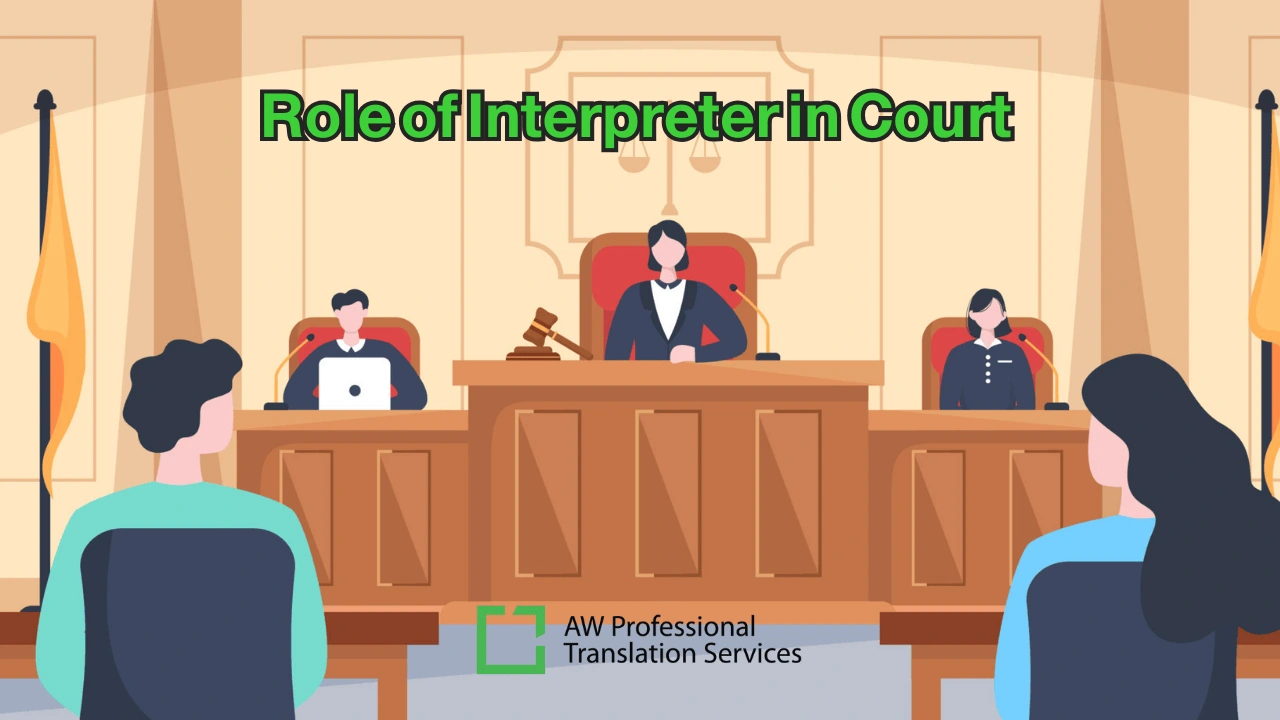
Role of Interpreter in Court | Importance of Court Interpretation | AW PTS

The role of interpreter in court is a cornerstone of fair and transparent legal proceedings. In courts where participants speak different languages, interpreters ensure that everyone understands what is being said, their rights, and the legal consequences of every statement.

The importance of court interpretation has grown significantly with globalization, immigration, and international legal disputes. Without professional court interpreters, justice systems risk misunderstandings, wrongful decisions, and violations of due process.

What Is a Court Interpreter?

What Is a Court Interpreter?A court interpreter is a highly trained language professional who provides accurate, impartial, and complete interpretation during legal proceedings. Their work allows judges, lawyers, defendants, witnesses, and jurors to communicate clearly despite language barriers.

The role of interpreter in court is not to explain or simplify legal matters, but to faithfully interpret every spoken word exactly as intended.

Learn :  why you should hire a court interpreter 

Role of Interpreter in Court Explained

Ensuring Fair Trials

One of the primary responsibilities in the role of interpreter in court is to ensure that non-native speakers receive the same level of understanding as native speakers. This is essential to:

  • Protect legal rights

  • Ensure informed consent

  • Enable effective legal defense

The importance of court interpretation is directly tied to fairness and equality before the law.

contact us aw pts

Accurate Interpretation of Legal Terminology

Legal language is complex, technical, and precise. Court interpreters must:

  • Interpret legal terms accurately

  • Maintain the original meaning and tone

  • Avoid omissions or additions

Even small interpretation errors can alter case outcomes, making the role of interpreter in court legally critical.

Supporting All Court Participants

Court interpreters provide interpretation for:

  • Defendants

  • Witnesses

  • Plaintiffs and respondents

  • Lawyers and judges

The importance of court interpretation lies in ensuring smooth communication between all parties involved.

 Learn how we manage Quality assurance in localization

Maintaining Neutrality and Confidentiality

Professional court interpreters must remain:

  • Completely neutral

  • Unbiased toward any party

  • Bound by strict confidentiality rules

The role of interpreter in court requires ethical discipline, as interpreters must never influence proceedings or express personal opinions.

Learn About :  certificates translation 

Importance of Court Interpretation in Legal Systems

Protecting Legal Rights

The importance of court interpretation is especially evident in protecting fundamental legal rights, such as:

  • The right to understand charges

  • The right to testify accurately

  • The right to legal representation

Without proper interpretation, these rights may be compromised.

Preventing Misinterpretation and Legal Errors

Incorrect or incomplete interpretation can lead to:

  • Misunderstood testimonies

  • Incorrect rulings

  • Appeals and retrials

This highlights why the role of interpreter in court must be handled by certified and experienced professionals.

Supporting International and Multilingual Cases

With increasing cross-border legal cases, the importance of court interpretation continues to grow. Court interpreters enable:

  • International litigation

  • Immigration and asylum cases

  • Cross-border commercial disputes

Skills Required for Court Interpreters

To perform the role of interpreter in court effectively, professionals must have:

  • Advanced bilingual or multilingual fluency

  • Deep understanding of legal systems

  • Strong memory and concentration skills

  • Ability to work under pressure

These skills reinforce the importance of court interpretation as a specialized legal service, not general translation.

Common Challenges in Court Interpretation

Common Challenges in Court InterpretationCourt interpreters often face:

  • Rapid speech and interruptions

  • Emotional or hostile courtroom environments

  • Complex legal arguments

  • High responsibility with zero tolerance for errors

These challenges further demonstrate the critical role of interpreter in court proceedings.

Learn more about Legal interpretation 

Why Professional Court Interpretation Matters

Using unqualified interpreters can result in:

  • Legal misunderstandings

  • Procedural violations

  • Delays and increased legal costs

The importance of court interpretation lies in ensuring accuracy, compliance, and credibility within the legal system.

Why Choose AW PTS for Court Interpretation Services?

AW PTS provides professional court interpretation services that meet the highest legal and ethical standards. Our interpreters:

  • Are experienced in courtroom environments

  • Understand complex legal terminology

  • Maintain strict confidentiality and neutrality

  • Deliver accurate and reliable interpretation

When it comes to the role of interpreter in court, AW PTS ensures that language is never a barrier to justice.

contact us aw pts

-FAQs 

What is the role of an interpreter in court?

The role of an interpreter in court is to accurately and impartially interpret spoken communication between different languages during legal proceedings, ensuring all parties fully understand what is being said.

Why is court interpretation important for justice?

Court interpretation is essential because it protects legal rights, ensures fair trials, prevents misunderstandings, and allows non-native speakers to participate equally in legal proceedings.

Who needs a court interpreter?

Court interpreters are needed for defendants, witnesses, plaintiffs, attorneys, and any participant who does not fully understand the language used in court.

What skills must a court interpreter have?

A court interpreter must have advanced language proficiency, deep legal terminology knowledge, strong concentration, excellent memory, and the ability to remain neutral under pressure.

Conclusion

The role of interpreter in court is fundamental to maintaining fairness, accuracy, and transparency in legal proceedings. The growing importance of court interpretation reflects the need for professional, certified interpreters who can uphold justice across languages.

By working with trusted providers like AW PTS, courts and legal professionals ensure that every voice is heard and every word is understood. accurately and without bias.

Follow us on Linkedin for more info 

02Feb

Over the Phone Interpretation UAE | Instant Language Support | AW PTS

In today’s fast-paced business and legal environment, immediate communication across languages is essential. Over the phone interpretation UAE services provide instant access to professional interpreters, enabling clear communication without the need for on-site presence.

This article explains what “phone interpretation” is, when it is used, its benefits in the UAE market, and why AW PTS is the trusted choice for phone-based interpretation services.

What Is Over the Phone Interpretation?

What Is Over the Phone Interpretation?Over the phone interpretation (OPI) is a remote interpreting service where a professional interpreter facilitates communication between two or more parties via a phone call. The interpreter listens to the conversation and provides real-time interpretation between languages.

Unlike on-site interpretation, over the phone interpretation UAE services offer immediate access to language support without travel or setup delays.

Why Over the Phone Interpretation Is Important in the UAE

The UAE is a multicultural hub where businesses, legal entities, healthcare providers, and government organizations interact daily with speakers of different languages.

Over the phone interpretation UAE is essential because:

  • The UAE hosts a highly diverse population

  • Many interactions require urgent language support

  • Cross-border communication is common

  • Speed and accuracy are critical

Phone interpretation ensures smooth communication even in time-sensitive situations.

Learn : Why you should hire a court interpreter 

Common Use Cases for Phone Interpretation UAE

Over the phone interpretation is widely used across various sectors in the UAE:

Legal and Government Services

  • Police interviews

  • Legal consultations

  • Immigration inquiries

  • Emergency legal matters

contact us aw pts

Healthcare and Medical Services

  • Patient-doctor consultations

  • Emergency medical calls

  • Insurance discussions

Business and Corporate Communication

  • Client support calls

  • International negotiations

  • HR and recruitment interviews

Customer Support and Call Centers

  • Multilingual customer service

  • Complaint handling

  • Technical support

These use cases make over the phone interpretation UAE one of the most flexible interpretation solutions available.

Key Benefits of Phone Interpretation

Key Benefits of Over the Phone Interpretation1. Immediate Access

No scheduling delays, interpreters are available on demand.

2. Cost-Effective

Eliminates travel and on-site costs associated with in-person interpretation.

3. Confidential and Secure

Professional interpreters follow strict confidentiality standards.

4. Wide Language Coverage

Access to multiple languages regardless of location.

5. Ideal for Short or Urgent Calls

Perfect for quick conversations or unexpected situations.

 Learn how we manage Quality assurance in localization

Over the Phone Interpretation vs On-Site Interpretation

Aspect Over the Phone Interpretation On-Site Interpretation
Speed Immediate Requires scheduling
Cost Lower Higher
Location Anywhere in the UAE Physical presence
Best For Urgent & short calls Long proceedings
Flexibility Very high Limited

Both services have their place, but over the phone interpretation UAE excels in speed and convenience.

Industries That Rely on Over the Phone Interpretation UAE

  • Industries That Rely on Over the Phone Interpretation UAELegal and judicial sectors

  • Healthcare providers

  • Financial institutions

  • Government departments

  • Multinational corporations

  • Customer support centers

These industries depend on accurate and fast interpretation to avoid misunderstandings.

Learn : Types of interpretation in communications

Why Professional Interpreters Matter

Using untrained interpreters or bilingual staff can lead to:

  • Misinterpretation of critical information

  • Legal and compliance risks

  • Loss of trust and credibility

Professional interpreters ensure:

  • Accurate terminology

  • Neutral tone

  • Ethical standards

  • Cultural awareness

This is especially important for over the phone interpretation UAE in legal and medical contexts.

Why AW PTS Is the Best Choice for Over the Phone Interpretation UAE

AW PTS provides reliable, professional, and scalable over the phone interpretation UAE services tailored to the local market.

What Sets AW PTS Apart:

  • Qualified and experienced interpreters

  • Coverage of major languages used in the UAE

  • Fast response times

  • Confidential and secure communication

  • Expertise in legal, medical, and business interpretation

AW PTS ensures that every call is handled with accuracy and professionalism.

contact us aw pts

How the Over the Phone Interpretation Process Works at AW PTS

  1. Request an over the phone interpretation service

  2. Connect to a professional interpreter

  3. Begin real-time interpreted conversation

  4. End the call with complete clarity and accuracy

The process is simple, efficient, and designed for urgent communication needs.

FAQs – Over the Phone Interpretation UAE

What is over the phone interpretation?

Over the phone interpretation (OPI) is a remote service where a professional interpreter facilitates real-time communication between parties via a phone call in different languages.

How does over the phone interpretation UAE work?

You connect to a professional interpreter through a phone call, and the interpreter instantly translates the conversation between the required languages in real time.

When should I use over the phone interpretation UAE?

It is ideal for urgent, short, or unexpected situations such as legal consultations, medical emergencies, customer support calls, and business discussions.

Is over the phone interpretation legally accepted in the UAE?

Yes. Over the phone interpretation is widely used and accepted in many legal, medical, and business contexts in the UAE, especially for urgent communication.

What are the benefits of over the phone interpretation compared to on-site interpretation?

Over the phone interpretation offers immediate access, lower costs, high flexibility, and wide language coverage without the need for physical presence.


Conclusion: Over the Phone Interpretation UAE Is a Smart Solution

Over the phone interpretation UAE is an essential service for organizations that require immediate, accurate, and cost-effective language support. It enables clear communication without delays, regardless of location.

With AW PTS, you gain access to professional interpreters who understand the UAE market and deliver dependable interpretation services whenever you need them.

When communication cannot wait, over the phone interpretation is the solution, and AW PTS is the partner you can trust.

Follow us on Linkedin for more info