15Jan

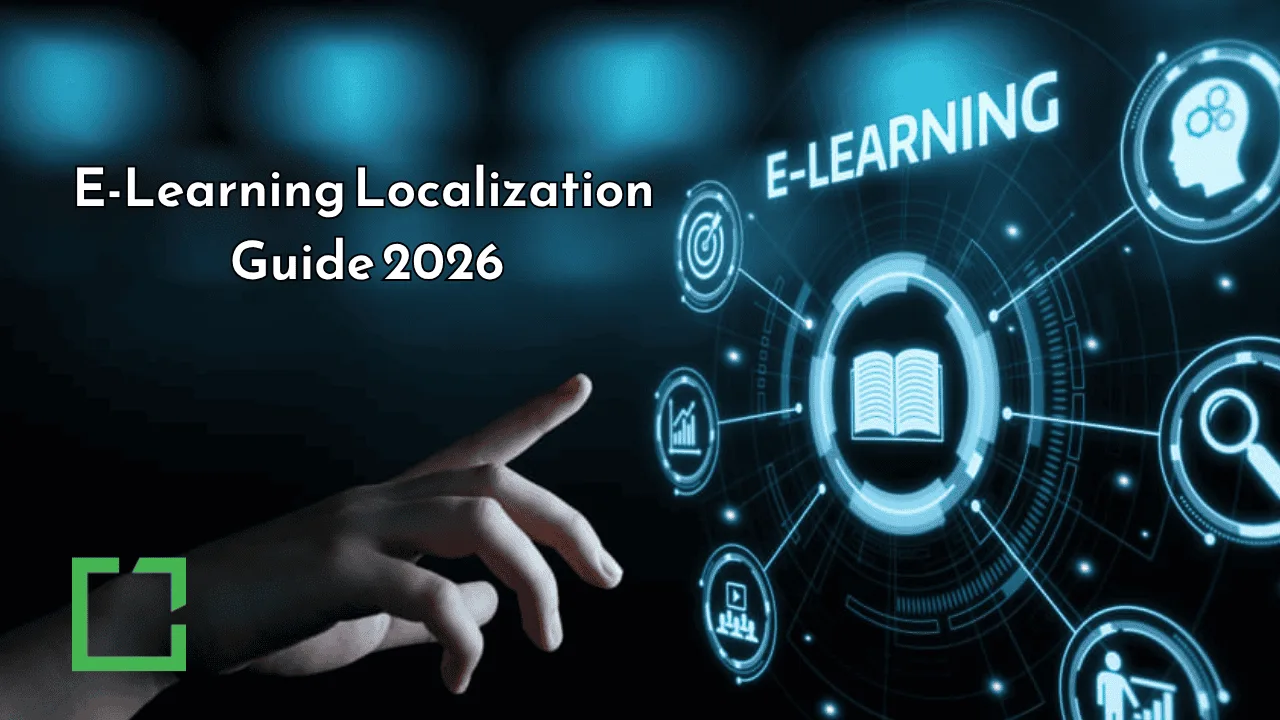
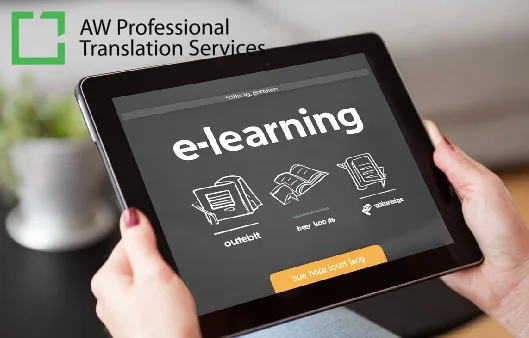
E-Learning Localization Guide 2026 | Professional Localization Services – AW PTS

Digital education has transformed how people learn, train, and upskill across the world. However, simply translating online courses is no longer enough. To succeed globally, organizations must invest in E-Learning localization – a strategic process that adapts educational content to different languages, cultures, and learning expectations.

This E-Learning localization guide 2026 explains what E-Learning localization is, why it matters, key aspects to focus on, and the complete localization process, while pointing how AW PTS delivers professional E-Learning localization services in all languages.

What Is E-Learning Localization?

What Is E-Learning Localization?Many organizations ask: what is E-Learning localization?

E-Learning localization is the adaptation of digital learning content for a specific target market. It goes beyond translation to include cultural, linguistic, technical, and educational adjustments that make learning content feel native to the learner.

Unlike basic translation, E-Learning localization ensures that:

  • Language is natural and educationally appropriate

  • Cultural references are relevant

  • Visuals and examples resonate locally

  • Learning outcomes remain effective

AW PTS treats E-Learning localization as a specialized service that combines linguistic expertise with instructional understanding.
contact us aw pts

Why E-Learning Localization Matters in 2026
Why E-Learning Localization Matters in 2026In 2026, global learners expect personalized and culturally aligned educational experiences. Poorly localized e-learning content leads to:

  • Lower engagement

  • Reduced knowledge retention

  • Higher course abandonment rates

  • Brand credibility loss

High-quality E-Learning localization services help organizations:

  • Expand into new markets

  • Improve learner performance

  • Increase course completion rates

  • Strengthen global brand trust

learn more about our services : Certificates Translation

Key Aspects of E-Learning Localization

Successful E-Learning localization depends on several critical components that must work together.

1. Linguistic Accuracy

Educational terminology, tone, and clarity must be adapted to the learner’s language level and academic context.

2. Cultural Adaptation

Examples, metaphors, scenarios, and visuals should align with cultural norms and expectations to avoid confusion or offense.

3. Visual and Multimedia Localization

Images, icons, colors, charts, animations, and infographics may need adjustment to match local preferences and regulations.

4. Audio and Video Localization

Voice-over, subtitles, narration speed, and accent selection play a major role in learner engagement.

5. UX and Interface Localization

Buttons, navigation, layouts, and text expansion must work seamlessly in the target language.

6. Legal and Compliance Considerations

Educational content must comply with local regulations, accessibility standards, and industry requirements.

These key aspects of E-Learning localization ensure learning effectiveness across markets.

The Process of E-Learning Localization
The Process of E-Learning LocalizationA structured approach is essential for consistent quality. Below is the professional process of E-Learning localization followed by AW PTS.

 Learn how we manage Quality assurance in localization

Step 1: Content Analysis

All learning materials are reviewed, including:

  • Text modules

  • Videos and audio

  • Assessments and quizzes

  • LMS structure

Step 2: Localization Strategy Planning

Target audience, learning goals, language variants, and cultural requirements are defined.

Step 3: Translation and Cultural Adaptation

Content is localized by specialized linguists with e-learning and subject-matter expertise.

Step 4: Multimedia Localization

Audio, video, graphics, and interactive elements are adapted for the target market.

Step 5: Technical Integration

Localized content is integrated into LMS platforms while maintaining functionality and formatting.

Step 6: Quality Assurance and Testing

Final checks ensure linguistic accuracy, technical compatibility, and learning effectiveness.

This structured process of E-Learning localization guarantees consistent, scalable results.

Follow us on Linkedin for more info 

Types of E-Learning Content That Require Localization

AW PTS provides E-Learning localization services for:

  • Corporate training programs

  • Academic online courses

  • Compliance and safety training

  • Product training modules

  • Microlearning content

  • Assessments and certifications

Each content type requires a tailored localization approach.

E-Learning Localization Services in UAE from AW PTS

AW PTS delivers professional E-Learning localization services designed to support global education and training initiatives.

How AW PTS Supports E-Learning Localization:

  • Specialized e-learning linguists and reviewers

  • Multilingual localization in all languages

  • Cultural and instructional adaptation

  • Multimedia and voice-over localization

  • LMS-ready content delivery

AW PTS ensures that localized learning content is accurate, engaging, and effective, not just translated.

contact us aw pts

E-Learning Localization in All Languages

AW PTS offers E-Learning localization in:

  • English

  • Arabic

  • French

  • Spanish

  • German

  • Asian languages

  • African and regional languages

This allows organizations to scale learning globally while maintaining local relevance.

Learn Data-driven localization strategy

Why Choose AW PTS for E-Learning Localization

Organizations choose AW PTS because it provides:

  • End-to-end E-Learning localization services

  • Educational and subject-matter expertise

  • Consistent quality across multiple languages

  • Scalable solutions for global rollout

  • Future-ready localization strategies for 2026 and beyond

E-Learning localization at AW PTS is a strategic service — not a generic translation task.

FAQs: E-Learning Localization Guide 2026

What is E-Learning localization?

E-Learning localization is the process of adapting digital learning content to a specific language, culture, and educational context. It goes beyond translation to ensure cultural relevance, usability, and effective learning outcomes.

How is E-Learning localization different from translation?

Translation focuses only on language, while E-Learning localization includes cultural adaptation, multimedia localization, UX adjustments, instructional tone, and compliance with local learning expectations.

Why is E-Learning localization important in 2026?

In 2026, learners expect personalized and culturally relevant learning experiences. Proper E-Learning localization improves engagement, knowledge retention, course completion rates, and global brand credibility.

What types of content require E-Learning localization?

E-Learning localization is required for corporate training, academic courses, compliance programs, product training, microlearning modules, assessments, and certification programs.

Does E-Learning localization include audio and video adaptation?

Yes. Professional E-Learning localization includes voice-over, subtitles, narration pacing, accent selection, and multimedia synchronization to ensure learner engagement and clarity.


As digital education continues to grow, E-Learning localization becomes a competitive necessity rather than a luxury. Understanding what is E-Learning localization, focusing on key localization aspects, and following a structured localization process are essential for success.

With professional E-Learning localization services from AW PTS, organizations can deliver impactful learning experiences to audiences worldwide, in every language, culture, and market.

Global learning succeeds when it feels local.
14Jan

Professional Certificates Translation Services for Official Use | AW PTS

In an increasingly globalized world, official documents must be accurately translated to meet legal, academic, and governmental requirements. Certificates translation is a critical service for individuals and organizations dealing with international authorities, embassies, courts, universities, and employers.

This article explains what certificates translation is, the different types of certificates that require professional translation, and why AW PTS is the trusted provider of certificates translation services across all languages.

What Is Certificates Translation?

Certificates translation is the Legal translation of official documents issued by recognized authorities. These documents must be translated with extreme accuracy, preserving the original meaning, formatting, and legal validity.

Unlike general translation, certificates translation often requires:

  • Certified or sworn accuracy

  • Legal and official terminology

  • Formatting that matches the original document

  • Acceptance by authorities and institutions

AW PTS provides certificates translation services that meet international standards and official requirements.

contact us aw pts

Why Certificates Translation Requires Professional Expertise

Errors in certificates translation can lead to:

  • Application rejections

  • Legal complications

  • Delays in immigration or education processes

  • Financial losses

That’s why professional handling is essential, especially for documents used in official or legal contexts.

 Learn how we manage Quality assurance in localization

Types of Certificates Translation Services Offered by AW PTS

AW PTS offers comprehensive certificates translation services, covering all official document types.

Degree Certificate Translation

Degree Certificate TranslationDegree certificate translation is essential for:
  • University admissions

  • Academic equivalency

  • Employment abroad

  • Professional licensing

AW PTS ensures that degree titles, institutions, grades, and accreditation details are translated accurately and professionally.

Birth Certificate Translation

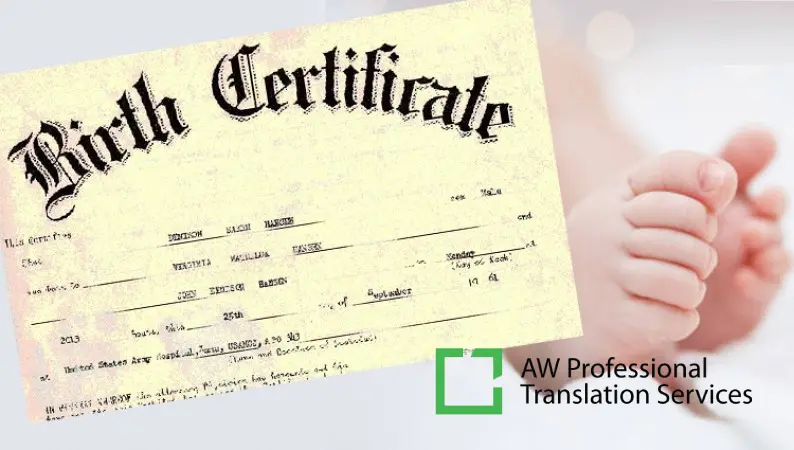
Birth Certificate TranslationBirth certificate translation is commonly required for:
  • Immigration and visa applications

  • Residency permits

  • Citizenship procedures

  • Family registration

AW PTS provides precise birth certificate translation, ensuring names, dates, places, and official seals are correctly represented.

Marriage Certificate Translation

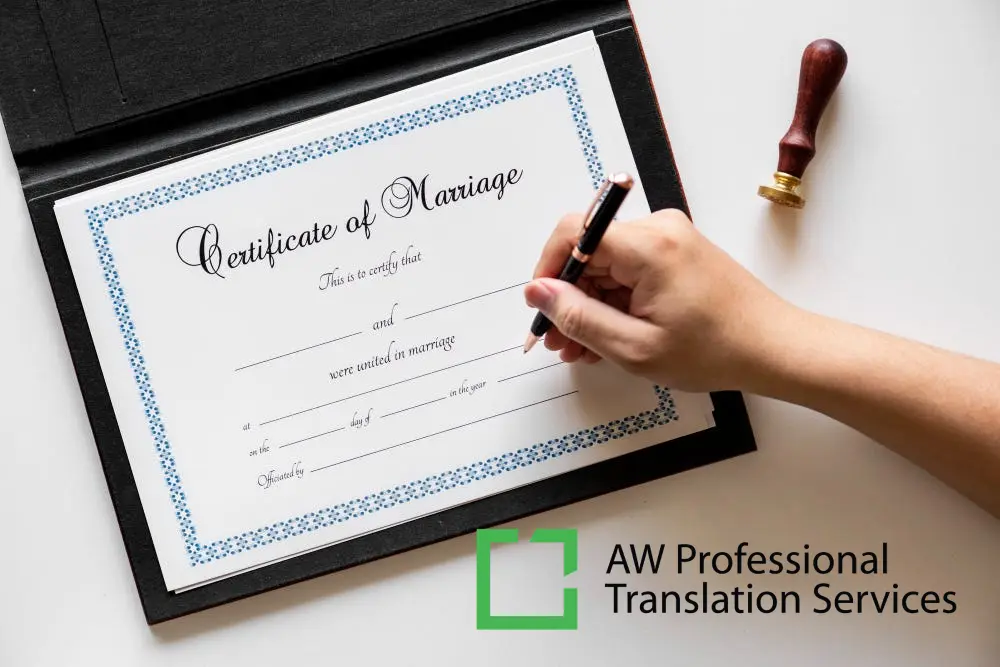
Marriage Certificate TranslationMarriage certificate translation is necessary for:
  • Family visas

  • Legal status changes

  • Immigration sponsorship

  • Government registrations

AW PTS delivers accurate marriage certificate translation that complies with legal and governmental requirements.

Divorce Certificate Translation

Divorce certificates often require professional translation for:

  • Legal proceedings

  • Immigration cases

  • Remarriage documentation

  • Financial settlements

AW PTS ensures confidentiality and accuracy in all divorce certificate translations.

Follow us on Linkedin for more info 

Death Certificate Translation

Degree Certificate Translation

Death certificate translation is required for:

  • Legal claims

  • Inheritance procedures

  • Insurance settlements

  • International registrations

AW PTS handles sensitive documents with professionalism and care.

Medical Certificate Translation

Medical certificates may be needed for:

  • Immigration medical exams

  • Insurance claims

  • Employment clearance

  • International treatment

AW PTS ensures accurate medical terminology and compliance with official standards.

Police Clearance Certificate Translation

Police certificates often require translation for:

  • Immigration

  • Employment abroad

  • Background checks

AW PTS provides precise and officially acceptable translations.

Commercial and Corporate Certificates Translation

Commercial and Corporate Certificates TranslationAW PTS also translates business-related certificates, including:


  • Commercial registration certificates

  • Tax certificates

  • Shareholding certificates

  • Incorporation documents

These translations support international business operations and compliance.

Certificates Translation in All Languages

One of the key strengths of AW PTS is its ability to provide certificates translation in all major and rare languages, including:

  • English

  • Arabic

  • French

  • Spanish

  • German

  • Italian

  • Chinese

  • Russian

  • And many more

Regardless of the source or target language, AW PTS ensures linguistic accuracy and official acceptance.

Why Choose AW PTS for Certificates Translation

AW PTS stands out as a trusted provider of certificates translation services due to:

  • Specialized translators for official documents

  • Accuracy-driven translation processes

  • Compliance with legal and governmental standards

  • Multilingual translation capabilities

  • Secure handling of sensitive documents

All types of certificates translation are treated as specialized services at AW PTS, not generic translations.

How AW PTS Supports Individuals and Organizations

AW PTS helps clients by:

  • Translating certificates for official and legal use

  • Ensuring translations meet embassy and authority requirements

  • Supporting personal, academic, and business needs

  • Delivering reliable translations across all languages

Whether you need degree certificate translation, birth certificate translation, marriage certificate translation, or any other type of certificates translation, AW PTS provides professional solutions you can trust.

contact us aw pts

FAQs: Certificates Translation Services

What is certificates translation?

Certificates translation is the professional translation of official documents issued by authorized institutions, such as universities, governments, courts, or hospitals, ensuring accuracy, legal validity, and official acceptance.

Why is professional certificates translation important?

Professional certificates translation is essential to avoid errors that can cause application rejection, legal issues, or delays in immigration, education, employment, or governmental procedures.

What types of certificates require professional translation?

Common documents include degree certificates, birth certificates, marriage certificates, divorce certificates, death certificates, medical certificates, police clearance certificates, and commercial or corporate certificates.

Is certified certificates translation required for official use?

Yes. Many authorities, embassies, courts, and universities require certificates to be translated by a professional or certified translation provider to ensure accuracy and legal compliance.

Does AW PTS provide certified certificates translation?

Yes. AW PTS provides professional certificates translation services that meet official, legal, and governmental requirements, ensuring acceptance by relevant authorities.


Professional certificates translation is essential when dealing with official authorities, legal processes, and international institutions. Accuracy, confidentiality, and compliance are non-negotiable.

With comprehensive services covering all types of certificates translation and support for all languages, AW PTS remains a reliable partner for individuals and organizations worldwide.

When accuracy matters, professional certificates translation makes all the difference.

12Jan

Why You Should Hire a Certified Court Interpreter | AW PTS

Legal depositions are critical moments in any legal case. Every statement, clarification, and response can influence outcomes, legal strategies, and court decisions. When a language barrier exists, accuracy becomes even more crucial. That is why hiring a certified court interpreter for a legal deposition is not just recommended, it is essential.

In this article, we explain what a certified court interpreter is, why certification matters, the risks of using unqualified interpreters, and how AW PTS ensures reliable, court-ready legal interpretation.

What Is a Certified Court Interpreter?

What Is a Certified Court Interpreter?A certified court interpreter is a professionally trained and tested language expert who has demonstrated the ability to interpret legal proceedings accurately, ethically, and impartially.
Certification typically confirms that the interpreter:

  • Has advanced bilingual proficiency

  • Understands legal terminology and procedures

  • Can interpret accurately under pressure

  • Follows strict ethical and confidentiality standards

In legal depositions, where precision is mandatory, certification is a critical qualification.

Why Legal Depositions Require a Certified Court Interpreter

A legal deposition is sworn testimony taken outside the courtroom but used as official evidence. Any error, omission, or misinterpretation can have serious legal consequences.

1. Accuracy Is Legally Critical

A certified court interpreter ensures that every question and answer is conveyed faithfully, without additions, omissions, or distortions. This protects the integrity of the testimony.

2. Depositions Are Legally Binding

Statements made during depositions can be referenced in court. An inaccurate interpretation can:

  • Change the meaning of testimony

  • Create contradictions

  • Damage credibility

  • Lead to legal disputes

Using a certified court interpreter minimizes these risks.

contact us aw pts

3. Compliance with Legal Standards

Courts and law firms often require certified interpreters to ensure due process and protect the rights of all parties. Non-certified interpreters may not meet admissibility or procedural standards.

Risks of Using Non-Certified Interpreters

Hiring an unqualified interpreter for a legal deposition can result in:

  • Misinterpretation of legal terms

  • Inaccurate or incomplete testimony

  • Challenges to deposition validity

  • Case delays or re-depositions

  • Increased legal costs

These risks far outweigh the cost of hiring a professional certified court interpreter.

Key Skills of a Certified Court Interpreter

Key Skills of a Certified Court InterpreterA qualified certified court interpreter brings more than language fluency.


Legal Terminology Expertise

They understand complex legal concepts, procedural language, and jurisdiction-specific terminology.

Real-Time Accuracy

Depositions require fast, accurate interpretation without hesitation or clarification errors.

Ethical Neutrality

Certified interpreters remain impartial and never influence testimony.

Strict Confidentiality

All information shared during depositions is protected under professional confidentiality standards.

 Learn how we manage Quality assurance in localization

Types of Interpretation Used in Legal Depositions

A certified court interpreter may provide:

  • Consecutive interpretation: The speaker pauses while interpretation is delivered

  • Simultaneous interpretation: Real-time interpretation when required

  • Sight translation: Reading and orally translating legal documents during the deposition

Each method requires advanced training and legal experience.

Why AW PTS Is the Right Choice for Certified Court Interpreters

AW PTS is a trusted provider of certified court interpreter services for legal depositions, courts, and law firms across multiple jurisdictions.

What Sets AW PTS Apart

  • Certified court interpreters with proven legal experience

  • Deep understanding of deposition procedures

  • Expertise in multilingual legal environments

  • Strict confidentiality and ethical compliance

  • On-site and remote deposition interpretation solutions

AW PTS ensures that interpretation meets the highest legal and professional standards.

contact us aw pts

Certified Court Interpreter Services for Law Firms and Courts

AW PTS supports:

  • Law firms

  • Corporate legal departments

  • Arbitration panels

  • Government and judicial institutions

Whether the deposition is in-person or remote, AW PTS provides certified court interpreters who are fully prepared for high-stakes legal environments.

Follow us on Linkedin for more info 

Remote Depositions and Certified Court Interpreters

With the rise of virtual legal proceedings, certified interpretation is more important than ever. AW PTS delivers secure remote interpretation solutions while maintaining accuracy, confidentiality, and legal compliance.

Technology enhances access — but certification ensures trust.

Legal Interpretation vs. Legal Translation

It’s important to distinguish between the two:

  • Legal interpretation: Spoken, real-time communication (depositions, hearings)

  • Legal translation: Written legal documents

AW PTS offers both services, ensuring seamless legal communication from deposition to documentation.

Conclusion: Accuracy and Justice Depend on Certification

Hiring a certified court interpreter for a legal deposition protects the accuracy of testimony, the rights of all parties, and the integrity of the legal process. In high-stakes legal settings, there is no room for error.

By choosing AW PTS, you partner with a trusted legal language provider that understands the importance of precision, professionalism, and compliance.

When every word matters, trust a certified court interpreter from AW PTS.

Learn Data-driven localization strategy

FAQS about certified court interpreter

1. What is a certified court interpreter?

A certified court interpreter is a professionally trained and tested language expert qualified to interpret legal proceedings accurately, ethically, and impartially.

2. Why is a certified court interpreter required for legal depositions?

Legal depositions involve sworn testimony used as official evidence. A certified court interpreter ensures accuracy, legal compliance, and protects the integrity of the testimony.

3. What are the risks of using a non-certified interpreter in a deposition?

Using a non-certified interpreter can lead to misinterpretation, invalid testimony, legal disputes, case delays, and increased legal costs.

4. Are depositions legally binding?

Yes. Statements made during depositions can be used in court, making accurate interpretation critical to avoid contradictions or credibility issues.

5. What skills does a certified court interpreter have?

Certified court interpreters possess legal terminology expertise, real-time accuracy, ethical neutrality, and strict confidentiality compliance.

12Jan

Legal Interpretation in Courts & Law Firms | Trusted Experts at AW PTS

Legal interpretation plays a critical role in ensuring justice, fairness, and clear communication within courts and law firms. In legal environments, where every word carries weight and consequences, even a minor misinterpretation can lead to serious legal, financial, or procedural outcomes.

As global mobility, cross-border disputes, and multinational legal cases continue to rise, legal translation and interpretation in courts and law firms has become an essential professional service. This is where expert providers like AW PTS stand out as trusted leaders in legal interpretation and translation across the MENA region and beyond.

What Is Legal Interpretation?

What Is Legal Interpretation?Legal interpretation is the oral transfer of spoken legal communication from one language to another, ensuring that meaning, intent, and legal accuracy are fully preserved. Unlike written legal translation, interpretation happens in real time and requires immediate precision.

Legal interpretation is used in:

  • Court hearings and trials

  • Depositions and witness testimonies

  • Attorney-client meetings

  • Arbitration and mediation sessions

  • Law enforcement interviews

In courts and law firms, interpretation is not optional, it is a legal necessity.

Why Legal Interpretation Is Critical in Courts

Courts operate under strict legal frameworks where language accuracy directly impacts justice.

1. Protecting Legal Rights

Defendants, plaintiffs, and witnesses must fully understand proceedings to exercise their legal rights. Professional legal interpretation ensures no party is disadvantaged due to language barriers.

2. Ensuring Due Process

Accurate interpretation guarantees that statements, objections, rulings, and testimonies are conveyed correctly, preserving procedural fairness.

3. Maintaining Court Integrity

Courts rely on certified, professional interpreters to maintain neutrality, confidentiality, and accuracy. Informal or unqualified interpretation can compromise case outcomes.

Legal Interpretation in Law Firms

Law firms regularly handle multilingual clients, contracts, and negotiations. Legal interpretation enables lawyers to communicate effectively while maintaining legal precision.

Common Use Cases in Law Firms

  • Client consultations

  • Cross-border negotiations

  • Legal advisory meetings

  • Compliance discussions

  • Internal multinational legal teams

For law firms, interpretation is not just about communication — it’s about protecting liability and ensuring professional standards.

contact us aw pts

Types of Legal Interpretation Used in Courts and Law Firms

Types of Legal Interpretation Used in Courts and Law Firms1. Consecutive Interpretation

The speaker pauses while the interpreter conveys the message. This method is commonly used in court testimonies, interviews, and legal meetings.

2. Simultaneous Interpretation

The interpreter translates in real time while the speaker continues. This is often used in large courtrooms, arbitration hearings, and multilingual proceedings.

3. Whispered Interpretation

Used for individual participants who need interpretation without disrupting proceedings.

Each method requires specialized training and legal expertise.

Key Challenges in Legal Interpretation

Legal interpretation is one of the most demanding interpretation fields.

Legal Terminology

Legal language is complex, technical, and jurisdiction-specific. Interpreters must understand legal systems, not just languages.

High-Stakes Environment

Errors can affect verdicts, contracts, or legal responsibilities. There is no margin for approximation.

Confidentiality and Ethics

Legal interpreters are bound by strict confidentiality and professional ethics.

Cultural and Linguistic Nuances

Legal meaning must be preserved without distortion caused by cultural differences or ambiguous phrasing.

Why Professional Legal Interpretation Matters

Using untrained or non-specialized interpreters can lead to:

  • Misrepresentation of testimony

  • Invalid legal procedures

  • Contract disputes

  • Delays in court proceedings

  • Legal liability for law firms

Professional legal interpretation safeguards accuracy, credibility, and compliance.

 Learn how we manage Quality assurance in localization

Why AW PTS Is a Trusted Leader in Legal Interpretation

AW PTS is recognized as one of the most reliable providers of legal interpretation in courts and law firms, delivering unmatched accuracy, professionalism, and confidentiality.

What Sets AW PTS Apart

  • Highly trained legal interpreters with court experience

  • Deep understanding of legal terminology and procedures

  • Strict confidentiality and ethical standards

  • On-site and remote legal interpretation solutions

  • Expertise across multiple legal systems and languages

AW PTS interpreters are not just language professionals — they are legal communication specialists.

contact us aw pts

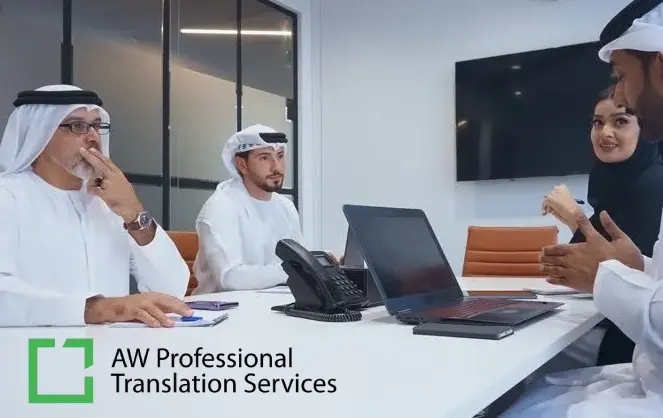
Legal Interpretation Across the MENA Region

In the MENA region, legal interpretation often involves Arabic-English interpretation alongside other global languages. This requires:

  • Mastery of Modern Standard Arabic

  • Familiarity with regional legal frameworks

  • Cultural sensitivity in legal communication

AW PTS excels in delivering high-quality legal interpretation tailored to courts and law firms operating in the Middle East and North Africa.

Follow us on Linkedin for more info 

Legal Interpretation vs. Legal Translation

While both are critical, they serve different purposes:

  • Legal interpretation: Spoken, real-time communication

  • Legal translation: Written legal documents

AW PTS provides both services, ensuring seamless legal communication across all formats.

Technology and Legal Interpretation

Modern courts and law firms increasingly rely on:

  • Remote interpretation

  • Virtual court hearings

  • Secure communication platforms

AW PTS integrates technology with human expertise, ensuring interpretation remains accurate, secure, and compliant — even in remote environments.

Learn Data-driven localization strategy

How Legal Interpretation Supports Justice and Compliance

Professional legal interpretation:

  • Prevents misunderstandings

  • Ensures equal access to justice

  • Protects legal integrity

  • Supports fair representation

  • Enhances cross-border legal cooperation

It is a foundational element of modern legal systems.

Conclusion: Accuracy Is Non-Negotiable in Legal Interpretation

Legal interpretation in courts and law firms is not a simple language service — it is a cornerstone of justice, fairness, and professional responsibility. Every word matters, every meaning counts, and every interpretation must be precise.

By choosing AW PTS, courts, law firms, and legal institutions gain a trusted partner with proven expertise in legal interpretation, ensuring clarity, compliance, and confidence in every legal interaction.

When justice depends on language, AW PTS delivers certainty.

FAQS

1. What is legal interpretation in courts and law firms?

Legal interpretation is the real-time oral conversion of legal communication from one language to another, ensuring accuracy, intent, and legal meaning are fully preserved during proceedings.

2. Why is legal interpretation important in court proceedings?

Legal interpretation protects legal rights, ensures due process, maintains fairness, and prevents misunderstandings that could affect verdicts or procedural outcomes.

3. What is the difference between legal interpretation and legal translation?

Legal interpretation involves spoken, real-time communication in hearings or meetings, while legal translation deals with written legal documents such as contracts, rulings, and agreements.

4. What types of legal interpretation are used in courts?

Courts commonly use consecutive interpretation, simultaneous interpretation, and whispered interpretation, depending on the setting and number of participants.

5. Why should law firms use professional legal interpreters?

Professional legal interpreters ensure accuracy, confidentiality, ethical compliance, and protection from legal liability, which untrained interpreters cannot guarantee.

11Jan

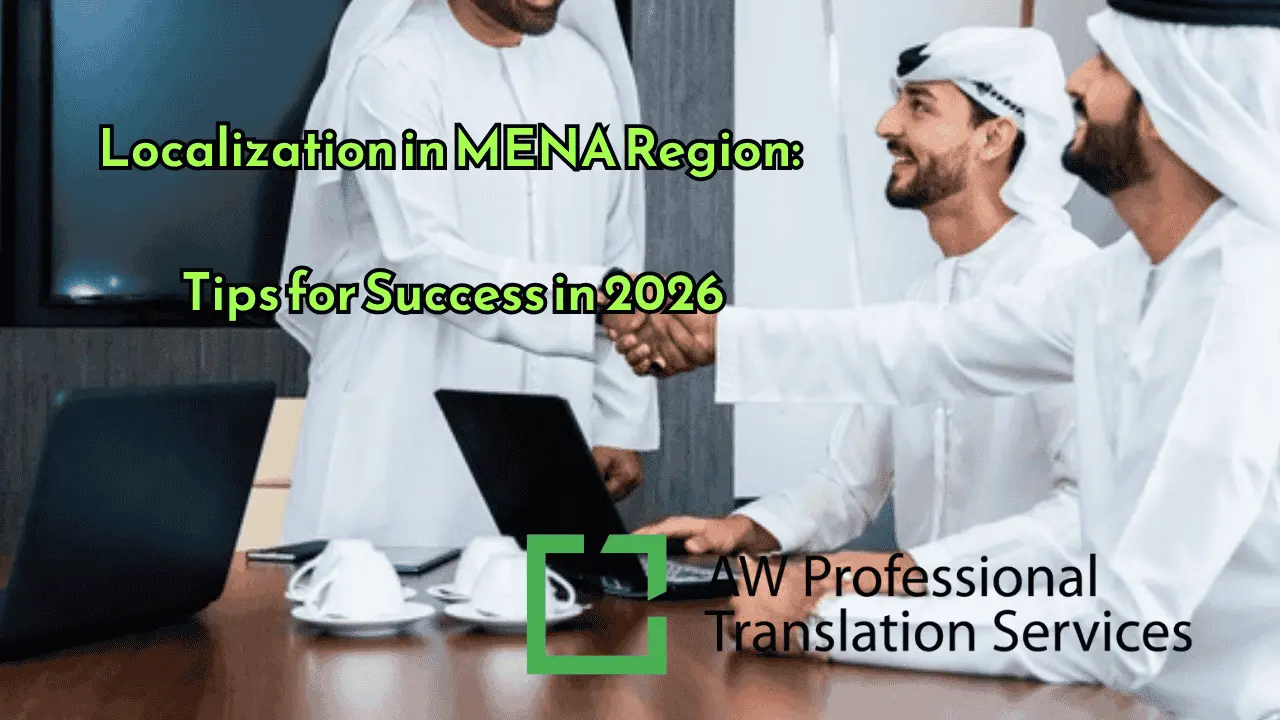
Localization in MENA Region: Tips for Success in 2026

Expanding into the Middle East and North Africa is no longer optional for global brands — it’s a strategic necessity. However, success in this market requires more than translation. True Localization in MENA Region demands cultural intelligence, linguistic expertise, and technical precision.

As businesses look toward growth in 2026, MENA region localization has become a defining factor in brand credibility, search visibility, and customer trust. This is where working with an experienced localization partner like AW PTS, the leading localization and translation company in the MENA region, makes a measurable difference.

Why MENA Region Localization Is Critical in 2026

Why MENA Region Localization Is Critical in 2026

The MENA region represents one of the fastest-growing digital economies in the world. With millions of Arabic-speaking users, mobile-first behavior, and strong cultural identity, localization directly impacts performance.

Key reasons Localization in MENA Region matters:

  • Arabic remains the language of trust and conversion

  • Cultural alignment influences buying decisions

  • Users expect localized UX and messaging

  • Search behavior differs significantly across MENA countries

Without a strong Middle Eastern localization strategy, brands struggle to gain traction, authority, and long-term growth.

contact us aw pts

Translation vs. Localization in the MENA Region

Many companies confuse translation with localization. Translation focuses on language, while MENA region localization adapts the entire experience.

Effective localization includes:

  • Cultural adaptation of messaging and tone

  • Arabic RTL design and layout support

  • Localized SEO and keyword targeting

  • Market-specific visuals and content

  • Compliance with regional norms

True Localization in MENA Region ensures your brand feels native, credible, and relevant.

How Localization Helps Level Up Your Business in the MENA Region

How Localization Helps Level Up Your Business in the MENA RegionStrategic Middle Eastern localization is not just a communication tool — it’s a growth accelerator.
1. Builds Instant Trust with Local Audiences

When users see content that speaks their language and reflects their culture, trust forms immediately. MENA region localization removes friction and positions your brand as a local player, not a foreign outsider.

2. Increases Conversion Rates

Localized content converts better. From Arabic CTAs to culturally aligned messaging, Localization in MENA Region improves engagement, reduces bounce rates, and increases sales across digital platforms.

3. Strengthens Brand Authority

Professional Middle Eastern localization signals credibility and seriousness. Brands that invest in high-quality localization are perceived as reliable, established, and customer-focused.

4. Improves Search Engine Visibility

Localized SEO enables your content to rank for region-specific queries. By aligning keywords, intent, and language, MENA region localization boosts organic traffic and market reach.

5. Enables Faster Market Expansion

With the right localization framework, businesses can scale across multiple MENA countries efficiently — without rebuilding content from scratch each time.

Follow us on Linkedin for more info 

Key Challenges of Middle Eastern Localization

Linguistic Diversity

Arabic dialects vary across the region. Selecting the right balance between Modern Standard Arabic and localized dialects is critical for Localization in MENA Region success.

RTL Technical Complexity

Improper RTL implementation damages UX and credibility. A professional localization approach ensures smooth, user-friendly design.

Cultural Sensitivity

Religion, social values, and traditions shape communication. Cultural missteps can harm brand reputation if not handled carefully.

Learn Data-driven localization strategy

Why AW PTS Is the Best Localization and Translation Company in MENA

AW PTS stands out as the most trusted partner for Localization in MENA Region, combining linguistic excellence with deep regional expertise.

What Makes AW PTS the Best in the MENA Region:

  • Native Arabic linguists and localization specialists

  • Expertise in Middle Eastern localization across industries

  • SEO-optimized localization strategies

  • Full RTL and technical localization support

  • Proven experience across MENA markets

AW PTS doesn’t just translate content — it transforms brands for regional success through strategic MENA region localization.

 Learn how we manage Quality assurance in localization

SEO Best Practices for Localization in MENA Region

To outperform competitors in search results:

  • Use Localization in MENA Region, MENA region localization, and Middle Eastern localization naturally

  • Optimize headings and content structure

  • Focus on user intent and readability

  • Maintain high-quality, in-depth content

  • Ensure consistency across localized assets

Search engines reward relevance, expertise, and authenticity.

contact us aw pts

Conclusion: Win the MENA Market with the Right Localization Partner

In 2026, brands that want to grow in the Middle East and North Africa must move beyond basic translation. Strategic Localization in MENA Region is the foundation of trust, visibility, and long-term success.

By partnering with AW PTS, the best localization and translation company in the MENA region, businesses gain a competitive advantage built on cultural understanding, linguistic precision, and market expertise.

Middle Eastern localization isn’t a cost — it’s an investment in growth.

FAQS ABOUT Localization in MENA Region

1. What is localization in the MENA region?

Localization in the MENA region is the process of adapting content, language, design, and user experience to match Arabic culture, regional expectations, and technical requirements such as RTL layout.

2. Why is localization important for businesses entering the MENA market?

MENA region localization builds trust, improves user experience, increases conversion rates, and helps brands rank higher in regional search results by aligning with local language and cultural norms.

3. What is the difference between translation and localization in MENA?

Translation focuses only on language, while Localization in MENA Region adapts tone, visuals, SEO keywords, UX design, and cultural context to make content feel native to Middle Eastern audiences.

4. How does localization improve SEO in the MENA region?

Localized SEO targets region-specific keywords, Arabic search intent, and user behavior, helping websites gain higher visibility and organic traffic across Middle Eastern markets.

5. What challenges do companies face with Middle Eastern localization?

Common challenges include Arabic dialect differences, RTL technical issues, cultural sensitivity, and improper keyword targeting — all of which require expert localization handling.

25Nov

Medical Translation Services in Dubai: A Complete Guide by AW PTS

Dubai stands as one of the world’s most advanced medical hubs, attracting patients, professionals, and institutions from across the globe. With its multicultural population and international healthcare ecosystem, the demand for Medical Translation Services and Life Sciences Translation has become more critical than ever. From hospitals and clinics to pharmaceutical companies and research centers, accurate medical communication is essential to ensure patient safety, regulatory compliance, and seamless cross-border healthcare delivery.

At the heart of this communication lies the need for precise, culturally accurate, and technically sound medical localization services. This is where AW PTS, a leading translation and localization company, plays a vital role in supporting Dubai’s healthcare sector with reliable, compliant, and high-quality linguistic solutions.

What is Medical Translation Services?

What is Medical Translation Services?

Medical Translation Services involve the professional translation of healthcare-related content from one language to another while maintaining the exact meaning, terminology, and regulatory requirements. These services go far beyond literal translation. They require deep knowledge of medical terminology, healthcare regulations, and cultural nuances.

Examples of medical documents that require expert translation include:

  • Patient medical records
  • Clinical trial documentation
  • Informed consent forms
  • Medical reports and diagnoses
  • Prescription guidelines
  • Pharmaceutical labels and inserts
  • Medical device manuals
  • Health insurance documents
  • Research papers and academic medical studies

At AW PTS, Medical Translation Services are handled by certified linguists with medical backgrounds, ensuring accuracy, consistency, and compliance with UAE healthcare standards and international regulations.

contact us aw ptsWhy Medical Translation Matters in Dubai

Dubai’s healthcare system operates in a highly international environment. Patients come from Europe, Asia, Africa, and the Middle East seeking advanced treatments, creating a constant need for multilingual communication.

1. Patient Safety

Accurate medical translation ensures that patients fully understand diagnoses, treatment plans, medication instructions, and potential risks. Any error in translation can lead to severe medical consequences or legal complications.

2. Legal and Regulatory Compliance

Dubai healthcare authorities such as DHA (Dubai Health Authority) and MOHAP require clear documentation that meets strict compliance standards. AW PTS provides medical localization services aligned with these requirements.

3. International Collaboration

Hospitals in Dubai frequently collaborate with international specialists, research institutions, and pharmaceutical companies. Professional translation ensures smooth knowledge exchange without misinterpretation.

4. Enhanced Patient Trust

When patients receive information in their native language, it builds confidence, improves adherence to treatment, and increases satisfaction levels.

Learn How to Localize Software and Apps Here!

Who Needs Medical Translation Services?

Medical Translation Services are essential for a wide range of stakeholders, including:

  • Hospitals and healthcare institutions
  • Private medical clinics
  • Pharmaceutical companies
  • Medical device manufacturers
  • Insurance companies
  • Telemedicine platforms
  • Research institutions
  • Healthcare marketing agencies
  • Government healthcare departments

AW PTS works closely with all these sectors, delivering specialized medical localization services that meet the unique requirements of each industry segment.

 Learn how we manage Quality assurance in localization

Medical Localization Services: Beyond Translation

While translation focuses on converting text, medical localization services adapt content to suit the linguistic, cultural, and legal context of the target audience.

This includes:

  • Adjusting medical terminology to local standards
  • Localizing measurement units and dosage formats
  • Adhering to local regulatory guidelines
  • Ensuring cultural sensitivity in patient communication
  • Adapting healthcare content for different regions

AW PTS combines linguistic expertise with cultural intelligence to ensure medical content resonates clearly with its intended audience in Dubai and the wider GCC region.

Types of Medical Content Handled by AW PTS

Clinical Documentation

Includes patient histories, diagnostic reports, and treatment plans that require utmost accuracy and confidentiality.

Pharmaceutical Translation

Covers drug labels, prescriptions, clinical trial protocols, and regulatory submissions.

Medical Device Documentation

User manuals, safety instructions, and technical descriptions for medical equipment.

Healthcare Marketing Content

Websites, brochures, campaigns, and promotional materials that must comply with medical advertising regulations.

Academic and Research Papers

Scientific journals, case studies, and clinical research reports requiring precise terminology.

The Role of Technology in Medical Translation

AW PTS integrates advanced translation technologies such as:

  • CAT tools for consistency
  • Terminology management systems
  • Quality assurance software
  • Secure file handling systems

However, all translations undergo human review by medical specialists to ensure contextual and technical accuracy.

GET TO KNOW OTHER AW SERVICES!

Quality Assurance in Medical Translation

Medical Translation Services demand a strict quality control process. AW PTS follows a multi-step methodology:

  1. Initial translation by a medical linguist
  2. Review by a subject-matter expert
  3. Proofreading for linguistic accuracy
  4. Final compliance verification
  5. Delivery with full confidentiality

This rigorous approach guarantees industry-leading accuracy and reliability.

Regulatory Compliance and Standards

AW PTS adheres to international and UAE-specific standards such as:

  • ISO 17100 for translation services
  • HIPAA compliance for patient data confidentiality
  • DHA and MOHAP regulations
  • EU MDR and FDA documentation requirements

These standards ensure that every project meets global healthcare communication benchmarks.

Follow us on Linkedin for more info 

Challenges in Medical Translation

Complex Terminology

Medical language is highly specialized and constantly evolving.

Cultural Sensitivity

Medical communication must respect cultural beliefs and practices.

Legal Implications

Incorrect translation can result in malpractice claims or compliance violations.

Data Security

Medical data confidentiality is paramount. AW PTS implements strict data protection policies for all projects.

How AW PTS Enhances Medical Communication

AW PTS stands out as a trusted partner for Medical Translation Services in Dubai by offering:

  • Specialized medical translators
  • End-to-end localization solutions
  • Rapid turnaround times
    n- Confidentiality and data security
  • Multilingual capabilities across 200+ languages
  • Healthcare-focused translation workflows

The company ensures that medical content remains accurate, compliant, and culturally relevant across all touchpoints.

contact us aw pts

The Business Impact of Medical Translation

Improved Market Reach

Hospitals and healthcare providers can expand their services to international patients.

Better Patient Outcomes

Accurate information leads to better understanding and treatment adherence.

Stronger Brand Reputation

Professional communication reinforces credibility and trust.

Reduced Legal Risk

Compliance-based translations minimize operational risks.

Medical Translation for Digital Healthcare

Dubai is rapidly transitioning toward digital healthcare services such as telemedicine and mobile health apps. AW PTS supports this evolution by providing:

  • App localization for healthcare platforms
  • Multilingual patient portals
  • Online consultation tool translations
  • EHR system localization

This ensures seamless digital experiences for patients from different linguistic backgrounds.

Best Practices for Medical Translation Services

  • Use certified medical translators
  • Implement terminology consistency
  • Ensure multiple quality checks
  • Maintain strict confidentiality
  • Integrate localization strategies

AW PTS follows these best practices to deliver superior medical translation and localization services.

Learn Modern English to Old English Translation and how it works!

Future of Medical Translation in Dubai

With Dubai positioning itself as a global healthcare destination, the demand for Medical Translation Services will continue to rise. Emerging trends include:

  • AI-assisted medical translation
  • Real-time multilingual medical consultations
  • Personalized healthcare communication
  • Increased demand for localization in medical tourism

AW PTS remains at the forefront of these advancements, helping healthcare providers stay competitive and globally connected.

Why Choose AW PTS for Medical Translation Services?

Choosing the right partner for medical translation is critical. AW PTS offers:

  • Proven expertise in medical localization services
  • Industry-specific translators
  • Compliance-driven approach
  • Fast and accurate delivery
  • Custom solutions tailored to healthcare needs

AW PTS is not just a translation company, it is a strategic partner committed to enhancing healthcare communication in Dubai and beyond.

contact us aw pts

Frequently Asked Questions (FAQs)

1. What are Medical Translation Services?
Medical Translation Services involve accurately translating medical and healthcare-related content while preserving technical terminology, clinical meaning, and regulatory compliance.

2. Why are medical localization services important in Dubai?
Because Dubai serves a diverse, international patient base, medical localization services ensure that healthcare content is culturally appropriate, legally compliant, and easily understood by different linguistic communities.

3. How does AW PTS ensure accuracy in medical translation?
AW PTS uses certified medical translators, subject-matter experts, and a multi-stage quality control process to guarantee precision and consistency.

4. What types of documents can be translated?
AW PTS translates medical reports, clinical trials, prescriptions, medical device manuals, research papers, and pharmaceutical documentation.

5. Are Medical Translation Services confidential?
Yes, AW PTS follows strict data security protocols and confidentiality agreements to protect all sensitive medical information.

6. How long does medical translation take?
Turnaround time depends on document length and complexity, but AW PTS offers fast yet accurate delivery without compromising quality.

7. Is medical localization different from medical translation?
Yes. While translation converts text, medical localization adapts content to local medical standards, cultural needs, and legal frameworks.

8. Does AW PTS support multilingual medical translation?
Absolutely. AW PTS provides medical translation and localization services in over 200 languages.

9. Can medical translations be used for regulatory submissions?
Yes, AW PTS ensures all translations meet DHA, MOHAP, FDA, and international regulatory standards.

10. Why should healthcare providers choose AW PTS?
Because AW PTS combines medical expertise, linguistic excellence, and compliance-focused workflows to deliver reliable Medical Translation Services in Dubai.

Medical Translation Services are an essential pillar of Dubai’s globally connected healthcare system. From patient communication to regulatory compliance, every detail matters. In an environment where accuracy can save lives, partnering with a trusted expert like AW PTS ensures clarity, safety, and excellence.

Through advanced medical localization services, AW PTS bridges linguistic gaps and empowers healthcare organizations to deliver world-class care to a diverse international audience. As Dubai continues to evolve as a global healthcare leader, AW PTS remains your reliable partner for precise, compliant, and effective medical communication.

25Nov

E-Commerce Localization: The Ultimate Guide to Scaling Global E-Commerce with AW PTS

In the fast-paced world of digital retail, expanding beyond borders is no longer a luxury — it is a strategic necessity. However, entering international markets without proper localization can lead to confusion, poor user experience, and lost revenue. This is where E-commerce localization and translation becomes the backbone of successful global expansion.

With the rapid growth of global e-commerce, brands must adapt not just their language, but their entire shopping experience to meet cultural, linguistic, and behavioral expectations. AW PTS, a professional translation and localization services provider, helps e-commerce businesses bridge this gap with precision, strategy, and market intelligence.

What is E-Commerce Localization?

What is E-Commerce Localization?E-commerce localization is the process of adapting an online store to suit the cultural, linguistic, and functional expectations of a specific target market. It goes far beyond simple translation, encompassing currency formats, payment systems, product descriptions, user interface, and even marketing tone.
Through advanced e-commerce localization, AW PTS ensures that your online store feels native to every audience, increasing trust and driving conversions across global e-commerce platforms.

The Business Case for Localization in Global E-Commerce

The financial impact of proper localization is undeniable. Research consistently shows that customers prefer to shop on websites presented in their native language. In global e-commerce, localization directly influences purchasing decisions, customer loyalty, and brand credibility.

AW PTS helps businesses unlock new revenue streams by minimizing friction and maximizing relevance, making e-commerce localization a profitable investment rather than an operational expense.

Key business outcomes include:

  • Increased international sales
  • Higher conversion rates
  • Reduced cart abandonment
  • Stronger brand perception
  • Improved customer retention

Learn Data-driven localization strategy

What Are the Benefits of E-Commerce Localization?

Implementing professional e-commerce localization provides measurable competitive advantages in international markets. By adapting content and user experience, brands eliminate language barriers and enhance customer confidence.

Major benefits include:

  • Enhanced customer trust and engagement
  • Improved user experience flow
  • Greater market reach in global e-commerce
  • Stronger emotional connection with audiences
  • Consistent brand messaging across regions

AW PTS integrates linguistic accuracy with cultural intelligence to ensure every localized element aligns perfectly with market expectations.

contact us aw pts

Ecommerce Localization Best Practices

To achieve successful localization, businesses must follow structured best practices that align with both technical and cultural requirements.

Core practices include:

  • Using native professional translators
  • Adapting content culturally, not literally
  • Optimizing product descriptions for local SEO
  • Testing user interface functionality per region
  • Ensuring payment and regulatory compliance

AW PTS follows industry-leading frameworks to deliver scalable e-commerce localization solutions that ensure accuracy, performance, and consistency.

Learn more about translation and localization process

Product Catalog Translation

Product Catalog TranslationAccurate product catalog translation is one of the most critical components of e-commerce localization. Poor translations can misrepresent products, reduce credibility, and lead to customer dissatisfaction.
AW PTS ensures that product descriptions are optimized for both customers and search engines, supporting visibility across global e-commerce platforms while maintaining brand tone and clarity.

Elements localized include:

  • Product names and specifications
  • Descriptions and technical details
  • Categories and filters
  • Promotional content
  • Legal disclaimers

 Learn how we manage Quality assurance in localization

Payment and Shipping Localization

Payment and Shipping LocalizationFor global e-commerce success, localized payment and shipping systems are essential. Customers prefer familiar payment methods and transparent shipping policies that align with their region’s expectations.
AW PTS supports localization for:

  • Regional payment gateways
  • Local currency and tax formats
  • Shipping rules and delivery timelines
  • Return and refund policies
  • Checkout flow optimization

By aligning logistics with customer habits, e-commerce localization removes friction and builds trust at every touchpoint.

Customer Experience Optimization

A localized site must not only be understandable but also intuitive and seamless. Customer experience optimization ensures visitors feel comfortable navigating, browsing, and purchasing.

enhances customer journeys by:

  • Simplifying navigation and layout adaptation
  • Customizing UI/UX for regional behavior
  • Improving content flow and cultural relevance
  • Aligning tone with local communication preferences

This strategic approach strengthens relationships and boosts long-term loyalty in competitive global e-commerce environments.

SEO and Local Market Visibility in Online Marketplace

Search visibility is a cornerstone of e-commerce success. Without localized SEO, even the most refined store may struggle in international search engines.

AW PTS ensures e-commerce localization is optimized for:

  • Local keyword targeting
  • Regional search engine algorithms
  • Culturally relevant content strategies
  • Multilingual SEO structure
  • Local marketplace optimization

This guarantees higher visibility, organic traffic growth, and improved positioning across global e-commerce platforms.

Why Choose AW PTS for E-Commerce Localization?

AW PTS stands as a trusted partner in translation and localization services, delivering tailored strategies for scalable international growth.

Key advantages include:

  • Expertise in e-commerce localization
  • Industry-specialized linguists
  • Consistent multilingual workflow
  • SEO-driven localization strategies
  • Reliable delivery and support

Their comprehensive approach ensures that your brand scales globally with confidence and professionalism.

contact us aw pts

Frequently Asked Questions (FAQs)

What is e-commerce localization?

It is the process of adapting an online store to meet the language, cultural, and functional expectations of different markets.

How does localization impact global e-commerce growth?

It increases trust, improves engagement, and drives higher conversion rates across international markets.

Is e-commerce localization different from translation?

Yes, it includes cultural adaptation, UX optimization, and technical adjustments beyond just language conversion.

Can AW PTS localize large e-commerce platforms?

Yes, AW PTS handles scalable projects for businesses of all sizes.

How long does e-commerce localization take?

Timelines vary based on store size and complexity, but AW PTS ensures efficient delivery.

Does localization improve SEO performance?

Absolutely, localized SEO increases visibility and organic traffic in target markets.

How can I start a project with AW PTS?

You can contact AW PTS for a tailored consultation and personalized localization strategy.

Follow us on Linkedinfor more info 

Final Thoughts

In a competitive digital economy, e-commerce localization is the key to unlocking international success. By aligning your brand with cultural preferences and regional expectations, you create meaningful connections that drive sales and sustainability.

With AW PTS as your strategic partner, your e-commerce platform transforms into a globally optimized, customer-centric marketplace that thrives in the evolving world of global e-commerce translation.

21Nov

Voice-Over Localization: Complete Guide to Boosting Global Impact 

Audiences are up to three times more likely to trust a brand when its message is delivered in a familiar native accent and cultural tone rather than a neutral or generic voice.

In today’s hyper-connected digital landscape, content no longer competes locally, it competes globally. Brands operating across borders must ensure their message resonates with diverse audiences, cultures, and languages. This is where voice-over localization becomes a strategic powerhouse, especially in industries like advertising, e-learning, and multilingual gaming media services.

This complete guide explores how voice-over localization transforms ordinary content into culturally aligned experiences, while demonstrating how AW PTS, a leading localization and translation company, delivers high-end solutions that drive measurable marketing results.

By integrating voice-over localization with professional multilingual gaming media services, companies can enhance brand credibility, boost engagement, and increase conversion rates across global markets.

What is Voice-Over Localization?What is Voice-Over Localization?

Voice-over localization is the process of adapting spoken audio content to match the linguistic, cultural, and emotional nuances of a target audience. Unlike simple translation, it involves rewriting scripts, adjusting tone, selecting native voice talents, and synchronizing delivery to ensure authenticity and relevance.

At its core, voice-over localization ensures that a message feels natural, not foreign. In corporate finance, gaming, marketing, or entertainment sectors, poor localization can damage brand image, while precise adaptation strengthens trust and connection.

AW PTS approaches voice-over localization as a comprehensive strategy, not just a technical process. From linguistic accuracy to voice casting and audio engineering, every detail is optimized to ensure seamless audience engagement.

How Voice-Over Localization Works

The workflow of voice-over localization requires multiple structured stages to achieve professional-level results. At AW PTS, the process is designed for efficiency, accuracy, and emotional alignment.

Step-by-step process:

  • Script translation and cultural adaptation
  • Voice talent selection based on tone and brand identity
  • Audio recording in professional studios
  • Synchronization and timing adjustment
  • Quality assurance and final delivery

This methodology ensures each project reflects both linguistic precision and emotional intelligence. Whether it’s corporate presentations or multilingual gaming media services.

Learn more about translation and localization process

How to Achieve High-Quality Voice-Over Localization Results

Achieving superior voice-over localization requires more than technical audio skills. It demands a combination of strategic planning, cultural insight, and industry knowledge.

Key success factors include:

  • Native-speaking voice artists
  • Industry-specific terminology adaptation
  • Tone and pacing optimization
  • Cultural sensitivity checks
  • Contextual relevance

AW PTS integrates linguistic experts with audio engineers to ensure every localization project aligns with brand objectives and market expectations. This meticulous approach ensures that content not only translates words, but delivers impact.

contact us aw pts

Types of Voice-Over Services

Types of Voice-Over ServicesVoice-over localization covers a wide spectrum of services tailored to different industries and platforms. AW PTS offers specialized voice-over services for companies requiring multilingual gaming media services and corporate communication support.



Common types include:

  • Commercial and advertising voice-overs
  • E-learning and training modules
  • Gaming character voice acting
  • IVR and phone system recordings
  • Audiobook narrations
  • Documentary and corporate narration

Each voice-over service is handled with strategic intent, ensuring content remains emotionally resonant and culturally appropriate across all audiences.

Learn Modern English to Old English Translation and how it works!

Voice-Over Adaptation Techniques

Voice-over adaptation techniques play a crucial role in perfecting localized audio. It goes beyond language to focus on emotional delivery, linguistic synchronization, and cultural alignment.

Core techniques include:

  • Lip-sync and time-sync adaptation
  • Transcreation for emotional accuracy
  • Dialect selection and pronunciation tuning
  • Cultural tone mapping
  • Script reformatting for natural delivery

AW PTS applies industry-leading methodologies to enhance expressiveness and authenticity, ensuring voice-over localization strengthens brand storytelling rather than diluting it.

How Voice-Over Localization Can Enhance Your Marketing Efforts

Voice-over localization is not just a technical solution — it is a powerful marketing asset. Brands that invest in tailored voice localization experience improved customer retention, brand loyalty, and audience engagement.

Benefits include:

  • Stronger emotional connection with target audiences
  • Higher brand recall
  • Increased conversion rates
  • Improved user experience
  • Consistent global brand identity

By integrating voice-over localization into your marketing strategy, AW PTS helps transform global campaigns into regionally effective brand narratives.

 Learn how we manage Quality assurance in localization

Achieving Your Marketing Results with AW PTS

For companies seeking measurable return on investment, voice-over localization is a critical element of digital marketing success. AW PTS customizes voice-over solutions to align with brand objectives, audience demographics, and platform requirements.

Through advanced multilingual gaming media services, AW PTS enables brands to expand reach, reinforce credibility, and scale internationally with confidence.

Key marketing outcomes include:

  • Enhanced global visibility
  • Improved customer experience
  • Strengthened brand consistency
  • Higher audience engagement
  • Increased ROI

GET TO KNOW OTHER AW SERVICES!

Why Choose AW PTS for Voice-Over Localization?

AW PTS stands out as a premier voice-over localization and translation company with a proven track record across industries. Their integrated solutions combine linguistic precision with creative execution, making them the trusted choice for global businesses.

Competitive advantages:

  • Professional native voice talents
  • Industry-specific localization expertise
  • State-of-the-art recording technology
  • Scalable multilingual solutions
  • Fast turnaround times

By choosing AW PTS, businesses gain a strategic partner committed to enhancing communication and maximizing audience impact.

contact us aw pts

Frequently Asked Questions (FAQs)

What is the difference between voice-over localization and standard translation?

Voice-over localization focuses on adapting tone, emotion, and cultural relevance, while translation only converts words between languages.

Why is voice-over localization critical for international marketing?

It ensures your brand message feels natural and trustworthy to local audiences, increasing engagement and campaign effectiveness.

How do multilingual gaming media services support global game expansion?

They provide culturally accurate character voices and immersive storytelling for international players.

Are native speakers essential for high-quality voice-over localization?

Yes, native voice talents ensure authenticity and correct cultural expression.

Is voice-over localization cost-effective for businesses?

Yes, it delivers long-term ROI by expanding reach and improving brand credibility.

Can small businesses benefit from voice-over localization?

Absolutely, it enables them to compete globally with professional communication standards.

How can I start a project with AW PTS?

Simply contact AW PTS for a tailored consultation and scalable localization solution.

Follow us on Linkedin for more info 

Final Thoughts

Voice-over localization is no longer optional in global marketing — it is essential. From enhancing emotional engagement to reinforcing brand identity, it serves as a strategic bridge between businesses and their international audiences.

By leveraging voice-over localization alongside multilingual gaming media services, companies can deliver compelling, culturally aligned messages that convert and inspire.

AW PTS remains your trusted partner in voice localization excellence, ensuring your brand speaks clearly, confidently, and effectively across every market.

31Aug

Localization Quality Assurance (LQA) at Scale: Balancing Automation and Human Insight

Have you ever launched localized content only to realize it didn’t land quite right with your audience? That awkward moment when everything looks perfect on paper but fails to connect in real life? That’s where Localization Quality Assurance (LQA) steps in, and when done right, it can transform user experiences and build long-term trust.

In this blog, we’ll dive into how LQA is evolving at scale, explore techniques for automating the process, and understand why human reviewers remain irreplaceable, especially after deployment.

What Is Localization Quality Assurance (LQA)?

Localization Quality Assurance (LQA) is the process of reviewing and testing localized content to ensure it meets linguistic, cultural, and functional standards before going live. Unlike basic translation checks, LQA verifies that your content feels natural to native users and performs correctly within its intended environment — whether that’s an app, website, or software interface.

At its core, LQA ensures that every localized element — from text and visuals to user interactions — aligns with the expectations of your target audience. It’s about more than grammar; it’s about delivering a seamless, authentic experience that reflects your brand consistently across markets.

An effective LQA process evaluates:

  • Linguistic accuracy: Grammar, spelling, and terminology.

  • Cultural relevance: Whether the tone and expressions resonate locally.

  • Visual and functional integrity: Layouts, buttons, and UI elements that display correctly in all languages.

  • User experience: Ensuring the localized version feels as intuitive as the original.

contact us aw pts

Why Localization Quality Assurance (LQA) Matters Now More Than Ever

Today’s businesses are not just translating, they’re localizing for emotional, functional, and cultural accuracy. This means quality expectations have skyrocketed. Whether you’re launching a multilingual app, a localized website, or software for diverse user bases, users expect clarity, consistency, and relevance in their native language.

But how do you maintain high quality when dealing with tens or hundreds of languages and dialects across various platforms?

That’s where scaling LQA intelligently makes all the difference.

What Does Localization Quality Assurance (LQA) Actually Check?

Localization Quality Assurance (LQA) isn’t just a spell check. It’s a layered process that includes:

  • Linguistic accuracy: Is grammar, spelling, and terminology on point?
  • Cultural appropriateness: Does the message feel natural in the target culture?
  • UI/UX integrity: Are the translated strings breaking the layout or causing truncation?
  • Functional correctness: Are date formats, currencies, and system behaviors localized?

You can think of LQA as the final polish before you present your content to the world.

(Ready to go global? Let our professional translators turn your message into every language your business needs. Get a  quote today!)

Scaling Up, Automation to the Rescue

Manual QA across dozens of languages is simply not feasible at scale. That’s where automation helps lighten the load. Modern localization workflows now include a range of smart tools that streamline LQA without sacrificing quality.

  1. Automated Linguistic Checks

Tools like Verifika, Xbench, or QA Distiller scan for common issues, misspellings, terminology mismatches, inconsistent translations, and untranslated strings. These tools can flag thousands of potential errors in minutes, helping reviewers focus on what truly needs attention.

  1. AI-Powered Quality Engines

Some platforms, like Phrase’s Auto LQA, use machine learning to analyze past errors, predict future issues, and assign quality scores. This helps project managers prioritize tasks and reduce turnaround time while maintaining a strong quality baseline.

  1. TMS-Integrated QA

Most modern Translation Management Systems (TMS) now embed Localization Quality Assurance (LQA) checks during the translation process itself. This means translators can fix issues in real time, reducing the need for lengthy reviews later on.

Automation offers speed and scalability, but it’s not the full story.

 Learn how we manage Quality assurance in localization

The Human Touch, Why Native Testers Still Matter

The Human Touch, Why Native Testers Still Matter in Localization Quality AssuranceEven the best AI can’t replace native intuition. Languages are complex, cultural, and fluid. That’s why human reviewers, especially native testers, are still essential to delivering truly localized experiences.



  1. Post-Deployment Review

Once your content goes live, it enters the real world. Native reviewers can spot subtle issues, phrases that feel too formal, calls to action that don’t quite inspire, or layouts that break on different devices due to longer character sets.

  1. In-Context Testing

You can’t fully judge a translation until you see it in action. Native testers interact with your website, app, or software like real users. They provide feedback on tone, navigation clarity, and even how certain elements make them feel. This insight is something automation just can’t replicate.

  1. Feedback Loops

Involving reviewers post-deployment also means opening up feedback loops. You’re not just checking for errors, you’re learning from your audience and improving iteratively. That’s real localization maturity.

Learn Data-driven localization strategy

Building a Scalable Localization Quality Assurance (LQA) Workflow

Scaling LQA doesn’t mean doing everything at once, it means doing the right things efficiently. Here’s a smart workflow you can adapt:

  1. Automate first-pass checks: Run your files through QA tools to eliminate basic errors.
  2. Use linguistic reviewers for high-impact content: Focus human efforts where tone, nuance, and context matter most.
  3. Test in context: Use staging environments and involve native testers before going live.
  4. Implement feedback loops: Let reviewers comment on deployed content and iterate regularly.
  5. Track quality metrics: Use tools to score vendors or projects and identify consistent problem areas.

This balanced approach lets you maintain quality without burning out your teams, or your budget.

What is localization for Gaming? Check this article to know!

Common Pitfalls to Avoid

Even seasoned teams make mistakes when scaling Localization Quality Assurance (LQA). Here are some to watch out for:

  • Over-relying on automation: Tools can’t catch everything. Always include human review for brand-critical content.
  • Skipping context: Reviewing strings in isolation leads to mistakes. Always test in layout.
  • Lack of consistency: Not all reviewers use the same standards. Establish style guides and review protocols across languages.
  • Ignoring user feedback: Post-launch user input is gold. Don’t just file it away, act on it.

Follow us on Linkedin for more info 

FAQs About Localization Quality Assurance (LQA)

-Why is Localization Quality Assurance important?

It guarantees consistency, readability, and cultural relevance in multilingual content, helping brands build trust and avoid costly translation errors.

-Can AI replace human reviewers in LQA?

No, AI improves speed, but native reviewers ensure emotional and cultural accuracy that machines can’t replicate.

-What are common LQA challenges?

Common issues include inconsistent terminology, missing context, and over-reliance on automation without human review.

-How can companies scale Localization Quality Assurance?

By combining automation for quick checks with native experts for critical reviews, plus consistent style guides and quality tracking.

Final Thoughts

Localization Quality Assurance (LQA) is not a checkbox. It’s a continuous process that blends technology and human expertise. Automation speeds things up, but human insight brings the emotional intelligence that truly resonates with global audiences.

At scale, the trick is to balance the two, use automation for speed and efficiency, and native reviewers for depth and accuracy. Together, they ensure that your localized content is not only correct, but also culturally connected and user-approved.

So the next time you push global content live, ask yourself, have we checked both the machine’s boxes and the human ones?

Because great localization is more than accurate, it’s authentic.

contact us aw pts

31Aug

Localization for Virtual Reality: Adapting Content for Immersive Tech

If you’ve ever slipped on a VR headset and found yourself standing in the middle of a bustling Tokyo street or a medieval castle, you’ve already felt the power of virtual reality. But here’s a question: what makes those experiences feel real and meaningful, especially when you’re from a completely different part of the world?

The answer is localization. Localization for Virtual Reality!

And no, we’re not just talking about translating a few menu buttons. Localization for Virtual Reality is a whole different ballgame. It means adapting the entire virtual experience, visuals, sounds, controls, and interactions to fit different languages, cultures, and expectations. In VR, you’re not just reading or listening. You’re living the experience. So if the localization feels off, the whole illusion breaks.

Let’s dive into what makes VR localization so unique in 2025, and explore some of the emerging trends shaping this fascinating space.

contact us aw pts

Why Localization for Virtual Reality Is So Different

In a traditional app or website, localization might involve translating text, maybe tweaking some images, and adjusting the layout for different languages. But in VR, users are immersed in a fully 3D environment. Everything they see, hear, and touch has to feel natural and familiar, otherwise, it creates a disconnect.

Imagine walking through a VR version of a French bakery, but all the signs are in English, the staff speaks with a robotic American accent, and the pastries look more like bagels. You’d feel like something is off, even if you can’t put your finger on it. That’s the challenge VR developers face, getting every detail just right for every market.


Spatial Audio: Hearing It the Way Locals Do

One of the coolest parts of VR is how it uses spatial audio. Instead of just playing background music or flat sound effects, spatial audio simulates how sound moves around you. It makes you feel like someone’s actually whispering in your ear or walking past you from behind.

But here’s where localization comes in. Different cultures react to sound differently. The rhythm of speech, the tone of a voice, even the distance someone stands from you when they talk, these are all culturally influenced. Localizing spatial audio means more than translating dialogue, it means re-recording it with native speakers, adjusting volume and direction based on local preferences, and even changing ambient sounds to make the environment feel “right.”

For example, a forest in Japan might sound completely different from a forest in Brazil, not just in the types of birds you hear, but in the emotional tone the environment conveys.

localize and Translate Your game NOW!


UI That Speaks Your Language, and Your Culture

User interfaces in VR are nothing like those on a phone or computer. You don’t tap a screen, you point, move, gesture, or even speak. That makes localization more complex but also more powerful.

Text still matters, of course, and it needs to be translated clearly and concisely. But what about symbols and icons? What about colors and shapes? A thumbs-up gesture might be friendly in one culture and offensive in another. A red circle could mean “record” in one place and “danger” in another.

That’s why UI localization in VR isn’t just about language, it’s about adapting the experience to match how people interact with the world around them. You have to think like a local, not just speak like one.


Real-Time Speech Translation: Bridging Language Gaps on the Spot

One of the most exciting developments in Localization for Virtual Reality is real-time speech translation. Thanks to AI, it’s now possible for people speaking different languages to talk to each other in a virtual environment, and have their words translated instantly.

Think about what that means. You could attend a global virtual conference, collaborate with teammates across the world in a shared VR workspace, or even play a multiplayer game with friends from five different countries, without needing to speak the same language.
Of course, this kind of translation still has its hiccups. Humor, sarcasm, or slang can get lost. But the technology is getting better every day, and it’s opening doors for cross-cultural experiences that wouldn’t have been possible before.

Follow us on Linkedin for more info 


Culturally Adaptive Content: More Than Just Words

Here’s the thing, people don’t just speak different languages. They live in different realities. They value different things, have different social norms, and relate to the world in different ways. Good VR localization recognizes this and adapts the content accordingly.

That might mean changing a character’s clothing to reflect local styles, swapping out food items in a virtual kitchen, or even rewriting dialogue to reflect cultural norms. A joke that lands in New York might fall flat in Tokyo. A teaching method that works in Berlin might confuse someone in Cairo.

By tweaking these elements, developers can make the experience feel personal, like it was built just for that audience. And when you’re inside a VR world, that sense of personal connection makes all the difference.

Learn How to Localize Software and Apps Here!


AI That Learns What Works, and What Doesn’t

AI is playing a bigger role in Localization for Virtual Reality than ever before. It’s not just helping with translation, it’s learning from users. When people pause in a certain place, skip over dialogue, or react positively to a feature, AI takes note.

That feedback can be used to fine-tune the experience for different audiences. Maybe a voiceover needs more energy in one language. Maybe a menu needs simpler icons for a certain age group. Over time, the system learns and improves, delivering more personalized and effective content.

It’s like having a localization team working in the background, constantly observing, adjusting, and optimizing the experience for each user.

The Human Touch Still Matters

Now, with all this amazing tech, you might think we’re heading toward a fully automated future where AI handles all localization. But here’s the truth: machines can’t replace human insight.

You still need real people, cultural experts, native speakers, and creative writers, to shape the story, guide the tone, and catch the things AI will miss. The best VR experiences come from a blend of both worlds: smart technology powered by human understanding.

Learn what is Localization for Gaming?

FAQs for Localization for Virtual Reality

-How does Localization for Virtual Reality handle audio?

Localized spatial audio recreates realistic soundscapes with native accents and cultural sound cues for deeper immersion.

-Can Localization for Virtual Reality include real-time translation?

Yes, real-time speech translation lets users from different countries communicate naturally inside virtual worlds.

-Why do humans still matter in Localization for Virtual Reality?

Native experts add emotional and cultural depth that automation can’t, ensuring every experience feels truly authentic.

-What role does AI play in Localization for Virtual Reality?

AI enhances VR localization by automating translations, analyzing user reactions, and optimizing experiences for each market.

Wrapping Up

Localization for virtual reality isn’t just about translating words; it’s about crafting an immersive, inclusive experience that feels right, no matter where you’re from. As VR technology evolves, so do the expectations of global users. They want to be seen, heard, and understood, not just in language, but in culture.

By paying attention to spatial audio, culturally adaptive UI, real-time speech translation, and personalized AI, companies can create VR worlds that speak to everyone. And when done right, that’s when virtual reality truly becomes a shared reality.

contact us aw pts