 AW HOLDING
 Tel: +971 24912220
 sales@awprotranslations.com


[vc_row][vc_column][vc_custom_heading source=”post_title” font_container=”tag:h1|text_align:left”][vc_column_text]
Audiences are up to three times more likely to trust a brand when its message is delivered in a familiar native accent and cultural tone rather than a neutral or generic voice.
In today’s hyper-connected digital landscape, content no longer competes locally, it competes globally. Brands operating across borders must ensure their message resonates with diverse audiences, cultures, and languages. This is where voice-over localization becomes a strategic powerhouse, especially in industries like advertising, e-learning, and multilingual gaming media services.
This complete guide explores how voice-over localization transforms ordinary content into culturally aligned experiences, while demonstrating how AW PTS, a leading localization and translation company, delivers high-end solutions that drive measurable marketing results.
By integrating voice-over localization with professional multilingual gaming media services, companies can enhance brand credibility, boost engagement, and increase conversion rates across global markets.
What is Voice-Over Localization?
Voice-over localization is the process of adapting spoken audio content to match the linguistic, cultural, and emotional nuances of a target audience. Unlike simple translation, it involves rewriting scripts, adjusting tone, selecting native voice talents, and synchronizing delivery to ensure authenticity and relevance.
At its core, voice-over localization ensures that a message feels natural, not foreign. In corporate finance, gaming, marketing, or entertainment sectors, poor localization can damage brand image, while precise adaptation strengthens trust and connection.
AW PTS approaches voice-over localization as a comprehensive strategy, not just a technical process. From linguistic accuracy to voice casting and audio engineering, every detail is optimized to ensure seamless audience engagement.
How Voice-Over Localization Works
The workflow of voice-over localization requires multiple structured stages to achieve professional-level results. At AW PTS, the process is designed for efficiency, accuracy, and emotional alignment.
Step-by-step process:
- Script translation and cultural adaptation
- Voice talent selection based on tone and brand identity
- Audio recording in professional studios
- Synchronization and timing adjustment
- Quality assurance and final delivery
This methodology ensures each project reflects both linguistic precision and emotional intelligence. Whether it’s corporate presentations or multilingual gaming media services.
Learn more about translation and localization process
How to Achieve High-Quality Voice-Over Localization Results
Achieving superior voice-over localization requires more than technical audio skills. It demands a combination of strategic planning, cultural insight, and industry knowledge.
Key success factors include:
- Native-speaking voice artists
- Industry-specific terminology adaptation
- Tone and pacing optimization
- Cultural sensitivity checks
- Contextual relevance
AW PTS integrates linguistic experts with audio engineers to ensure every localization project aligns with brand objectives and market expectations. This meticulous approach ensures that content not only translates words, but delivers impact.
Types of Voice-Over Services
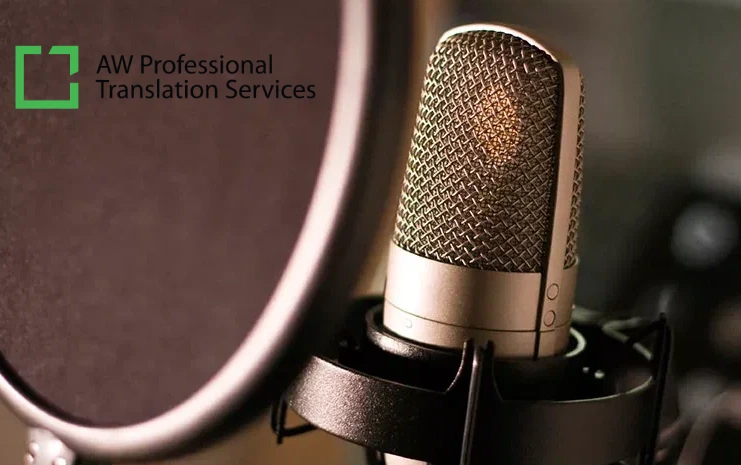 Voice-over localization covers a wide spectrum of services tailored to different industries and platforms. AW PTS offers specialized voice-over services for companies requiring multilingual gaming media services and corporate communication support.
Common types include:
- Commercial and advertising voice-overs
- E-learning and training modules
- Gaming character voice acting
- IVR and phone system recordings
- Audiobook narrations
- Documentary and corporate narration
Each voice-over service is handled with strategic intent, ensuring content remains emotionally resonant and culturally appropriate across all audiences.
Learn Modern English to Old English Translation and how it works!
Voice-Over Adaptation Techniques
Voice-over adaptation techniques play a crucial role in perfecting localized audio. It goes beyond language to focus on emotional delivery, linguistic synchronization, and cultural alignment.
Core techniques include:
- Lip-sync and time-sync adaptation
- Transcreation for emotional accuracy
- Dialect selection and pronunciation tuning
- Cultural tone mapping
- Script reformatting for natural delivery
AW PTS applies industry-leading methodologies to enhance expressiveness and authenticity, ensuring voice-over localization strengthens brand storytelling rather than diluting it.
How Voice-Over Localization Can Enhance Your Marketing Efforts
Voice-over localization is not just a technical solution — it is a powerful marketing asset. Brands that invest in tailored voice localization experience improved customer retention, brand loyalty, and audience engagement.
Benefits include:
- Stronger emotional connection with target audiences
- Higher brand recall
- Increased conversion rates
- Improved user experience
- Consistent global brand identity
By integrating voice-over localization into your marketing strategy, AW PTS helps transform global campaigns into regionally effective brand narratives.
Learn how we manage Quality assurance in localization
Achieving Your Marketing Results with AW PTS
For companies seeking measurable return on investment, voice-over localization is a critical element of digital marketing success. AW PTS customizes voice-over solutions to align with brand objectives, audience demographics, and platform requirements.
Through advanced multilingual gaming media services, AW PTS enables brands to expand reach, reinforce credibility, and scale internationally with confidence.
Key marketing outcomes include:
- Enhanced global visibility
- Improved customer experience
- Strengthened brand consistency
- Higher audience engagement
- Increased ROI
GET TO KNOW OTHER AW SERVICES!
Why Choose AW PTS for Voice-Over Localization?
AW PTS stands out as a premier voice-over localization and translation company with a proven track record across industries. Their integrated solutions combine linguistic precision with creative execution, making them the trusted choice for global businesses.
Competitive advantages:
- Professional native voice talents
- Industry-specific localization expertise
- State-of-the-art recording technology
- Scalable multilingual solutions
- Fast turnaround times
By choosing AW PTS, businesses gain a strategic partner committed to enhancing communication and maximizing audience impact.
Frequently Asked Questions (FAQs)
What is the difference between voice-over localization and standard translation?
Voice-over localization focuses on adapting tone, emotion, and cultural relevance, while translation only converts words between languages.
Why is voice-over localization critical for international marketing?
It ensures your brand message feels natural and trustworthy to local audiences, increasing engagement and campaign effectiveness.
How do multilingual gaming media services support global game expansion?
They provide culturally accurate character voices and immersive storytelling for international players.
Are native speakers essential for high-quality voice-over localization?
Yes, native voice talents ensure authenticity and correct cultural expression.
Is voice-over localization cost-effective for businesses?
Yes, it delivers long-term ROI by expanding reach and improving brand credibility.
Can small businesses benefit from voice-over localization?
Absolutely, it enables them to compete globally with professional communication standards.
How can I start a project with AW PTS?
Simply contact AW PTS for a tailored consultation and scalable localization solution.
Follow us on Linkedin for more info
Final Thoughts
Voice-over localization is no longer optional in global marketing — it is essential. From enhancing emotional engagement to reinforcing brand identity, it serves as a strategic bridge between businesses and their international audiences.
By leveraging voice-over localization alongside multilingual gaming media services, companies can deliver compelling, culturally aligned messages that convert and inspire.
AW PTS remains your trusted partner in voice localization excellence, ensuring your brand speaks clearly, confidently, and effectively across every market.