 AW HOLDING
 Tel: +971 24912220
 sales@awprotranslations.com


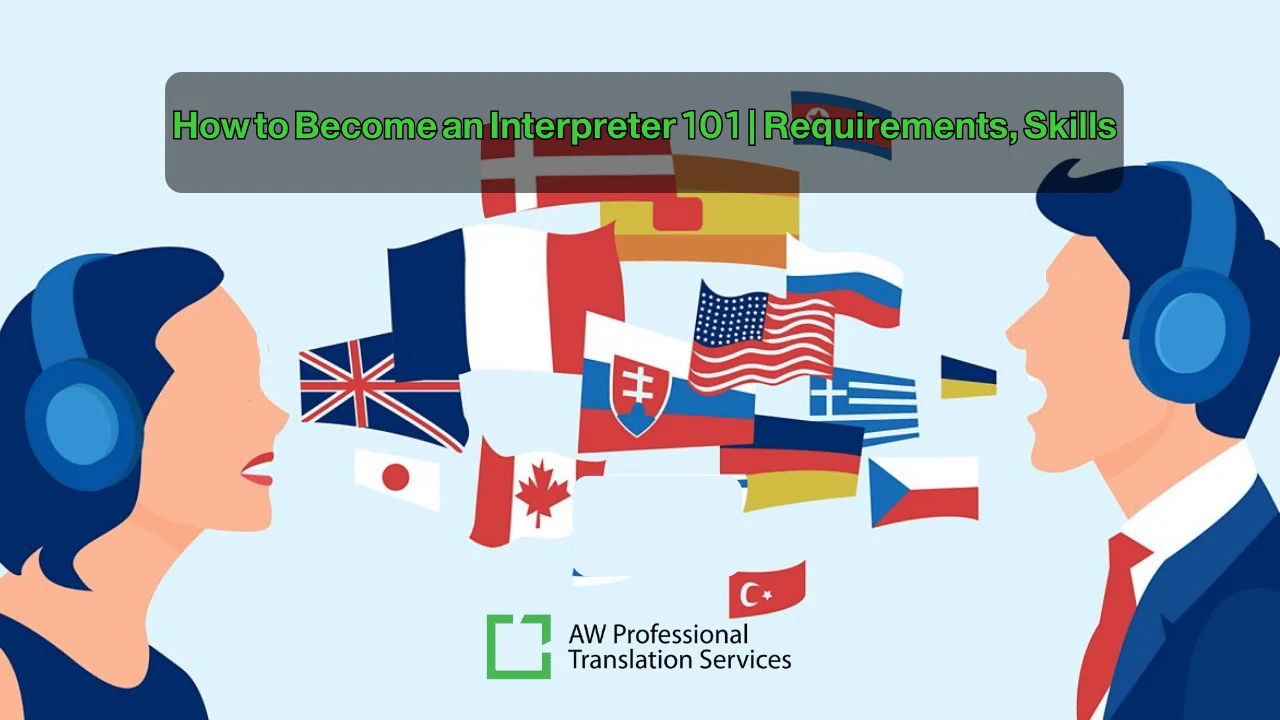
How to Become an Interpreter | Requirements, Skills & Career Path with AW PTS
The demand for professional interpreters is growing rapidly across industries such as healthcare, legal services, business, diplomacy, and international conferences. If you are bilingual or multilingual and interested in a language-focused career, you may be wondering how to become an interpreter and what steps are required to enter this profession.
This guide explains what an interpreter is, the skills and qualifications needed, the step-by-step process to become one, and how you can build a successful career, including opportunities to join the AW PTS team.
What Is an Interpreter?
 An interpreter is a language professional who converts spoken or signed communication from one language to another in real time, ensuring that the original meaning, tone, and intent are accurately conveyed.
Unlike translators, who work with written text, interpreters deal with spoken communication in live settings such as:
-
Conferences and events
-
Courtrooms
-
Hospitals and clinics
-
Business meetings
-
Phone and video calls
Types of Interpretation
Before learning how to become an interpreter, it’s important to understand the main interpretation types:
-
Simultaneous Interpretation – Interpreting in real time while the speaker is talking
-
Consecutive Interpretation – Interpreting after the speaker pauses
-
Over-the-Phone Interpretation (OPI) – Remote interpretation via phone
-
Video Remote Interpretation (VRI) – Interpretation through video platforms
-
Court and Legal Interpretation – Specialized interpretation for legal settings
Each type requires specific training and skills.
Learn about : interpretation types in law
Why Choose a Career as an Interpreter?
 Becoming an interpreter offers many advantages, including:
-
Global career opportunities
-
Work across multiple industries
-
Competitive income potential
-
Flexible work models (freelance or full-time)
-
Continuous professional growth
This makes learning how to become an interpreter a valuable career investment.
Learn about Types of Interpretation in Communication
Key Requirements to Become an Interpreter
1. Strong Language Proficiency
The most basic requirement is native or near-native fluency in at least two languages.
You must be able to:
-
Understand different accents and dialects
-
Speak clearly and confidently
-
Convey meaning accurately without omissions
2. Excellent Listening and Memory Skills
Interpreters must process information quickly.
Key abilities include:
-
Active listening
-
Short-term memory retention
-
Fast comprehension and response
These skills are especially critical in consecutive and simultaneous interpretation.
3. Cultural Awareness
Language is deeply connected to culture.
Professional interpreters must understand:
-
Cultural references and idioms
-
Formal vs. informal speech
-
Social and professional norms
This ensures accurate and culturally appropriate communication.
4. Specialized Training or Education
While not always mandatory, professional training greatly improves credibility.
Common options include:
-
Interpretation courses or diplomas
-
Linguistics or language degrees
-
Specialized legal or medical interpretation training
Training helps you master techniques, ethics, and industry standards.
5. Certification (When Required)
Certain sectors require official certification.
Examples include:
-
Court interpreter certification
-
Medical interpreter certification
-
Conference interpretation credentials
Certification boosts employability and trust.
6. Strong Ethics and Confidentiality
Interpreters must follow strict professional ethics, including:
-
Confidentiality
-
Accuracy and neutrality
-
Professional conduct
This is essential in legal, medical, and corporate environments.
Step-by-Step Guide: How to Become an Interpreter
 Step 1: Assess Your Language Skills
 Step 1: Assess Your Language Skills
Ensure you have professional-level fluency in both source and target languages.
Step 2: Choose Your Interpretation Field
Decide whether you want to work in:
-
Legal interpretation
-
Medical interpretation
-
Business and corporate settings
-
Conferences and events
-
Remote interpretation services
Specialization increases demand and income.
Step 3: Get Professional Training
Enroll in interpretation programs or workshops to learn:
-
Note-taking techniques
-
Memory enhancement
-
Interpretation strategies
-
Ethical standards
Step 4: Gain Practical Experience
Start building experience through:
-
Internships
-
Volunteer interpretation
-
Entry-level assignments
-
Shadowing professional interpreters
Experience is key to mastering real-world scenarios.
Step 5: Obtain Certifications (If Needed)
Certifications help you:
-
Qualify for specialized roles
-
Increase credibility
-
Access higher-paying opportunities
Step 6: Build a Professional Profile
Create:
-
A strong CV
-
Language and certification listings
-
Industry-specific experience highlights
This helps agencies and clients evaluate your expertise.
Step 7: Apply to Professional Interpretation Agencies
Partnering with a reputable agency gives you:
-
Consistent job opportunities
-
Professional support
-
Access to international clients
Common Challenges New Interpreters Face
When learning how to become an interpreter, be prepared for:
-
High mental concentration
-
Stressful environments
-
Fast-paced communication
-
Industry-specific terminology
With training and experience, these challenges become manageable.
Why Work With a Professional Interpretation Agency?
Working with a trusted agency offers:
-
Stable assignments
-
Fair compensation
-
Professional development
-
Ethical working standards
This is where AW PTS comes in.
Join the AW PTS Interpretation Team
AW PTS is a leading provider of professional interpretation services, supporting clients across legal, medical, corporate, and international sectors.
Why Join AW PTS?
-
Work with global clients
-
Access diverse interpretation projects
-
Professional support and quality standards
-
Opportunities for career growth
-
Ethical and transparent collaboration
If you are exploring how to become an interpreter or already have experience, you can apply to join the AW PTS team and grow your career with a trusted interpretation services provider.
FAQs
What does an interpreter do?
An interpreter converts spoken or signed communication from one language to another in real time, ensuring accuracy in meaning, tone, and intent across settings such as courts, hospitals, conferences, and business meetings.
What qualifications do I need to become an interpreter?
To become an interpreter, you need strong bilingual or multilingual proficiency, excellent listening and memory skills, cultural awareness, and professional training. Certifications may be required for legal or medical interpretation.
Do I need certification to become an interpreter?
Certification is not always mandatory, but it is often required for court, medical, and conference interpretation. Certified interpreters usually have better job opportunities and higher earning potential.
How long does it take to become a professional interpreter?
The timeline varies depending on language proficiency, training, and specialization. It can take several months to a few years to complete training, gain experience, and obtain certifications if required.
What skills are most important for interpreters?
Key skills include advanced language fluency, active listening, strong memory, concentration, cultural competence, note-taking techniques, and strict adherence to professional ethics.
What types of interpretation can I specialize in?
Common specializations include simultaneous interpretation, consecutive interpretation, court and legal interpretation, medical interpretation, over-the-phone interpretation (OPI), and video remote interpretation (VRI).
Final Thoughts
Understanding how to become an interpreter involves more than speaking two languages. It requires training, cultural awareness, ethical standards, and continuous skill development. With the right preparation and professional partnerships, interpretation can be a rewarding and long-term career.
If you’re ready to take the next step, AW PTS welcomes qualified interpreters to join its growing global team and be part of impactful multilingual communication worldwide.
Follow us on Linkedin for more info