 AW HOLDING
 Tel: +971 24912220
 sales@awprotranslations.com


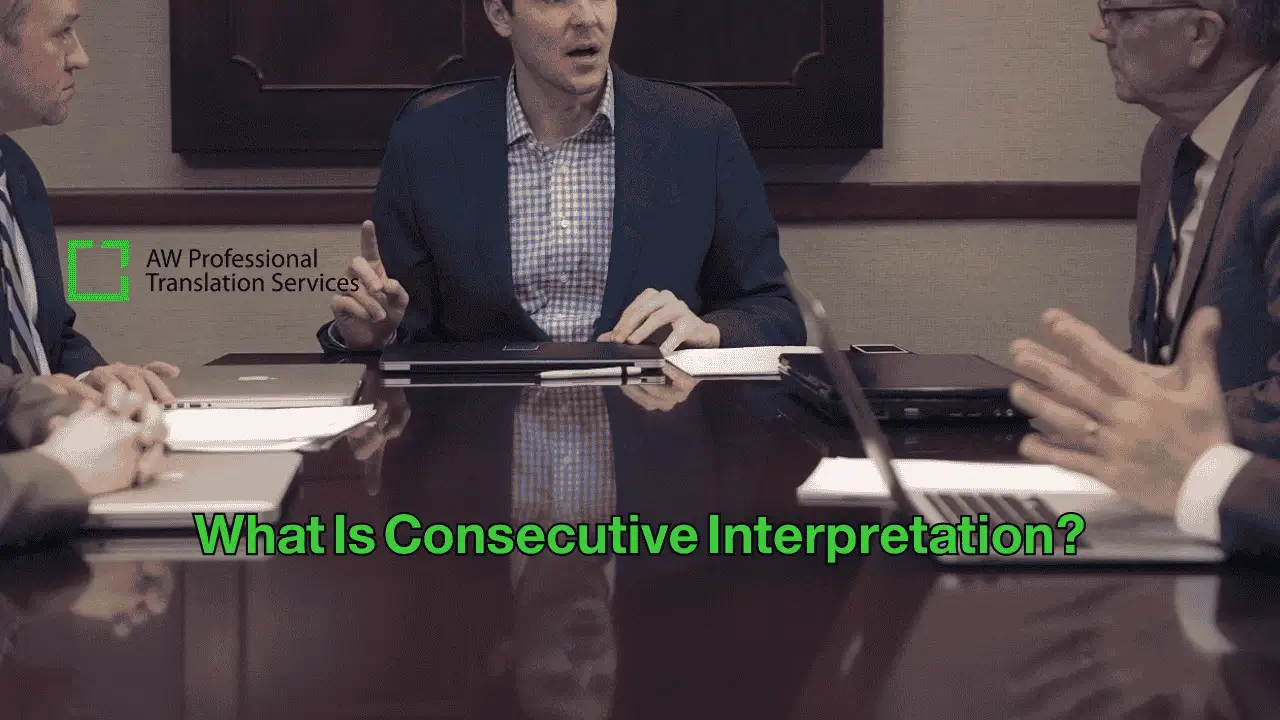
What Is Consecutive Interpretation? | guide AW PTS
In many professional settings, clear and accurate communication is essential, especially when participants speak different languages. One of the most commonly used interpretation methods in such situations is consecutive interpretation.
This article explains what is consecutive interpretation, how it works, where it is used, its benefits, and why professional consecutive interpretation services from AW PTS are essential for effective multilingual communication.
What Is Consecutive Interpretation?
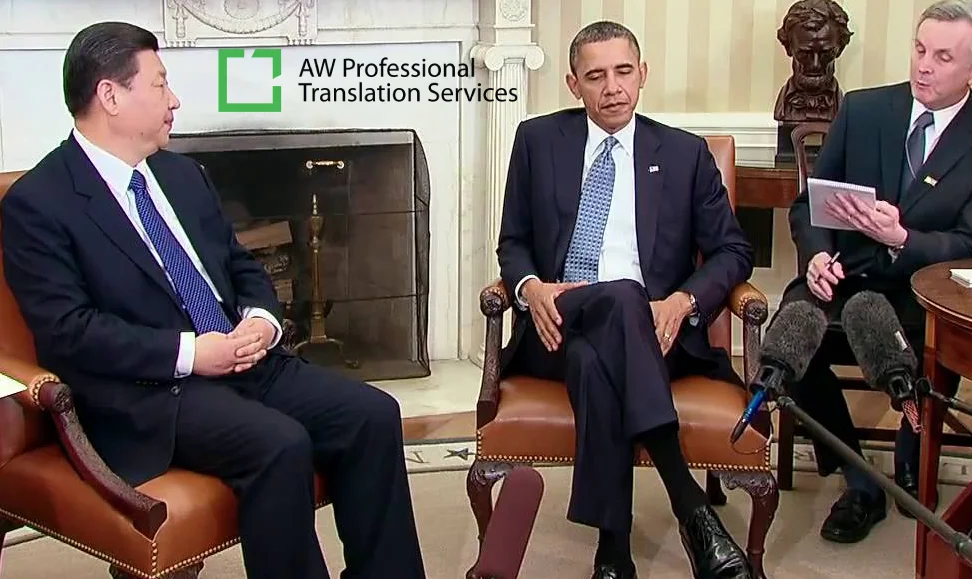 Consecutive interpretation is a type of oral interpretation where the speaker talks for a short period and then pauses, allowing the interpreter to translate the message into the target language.
Unlike simultaneous interpretation, the interpreter speaks after the speaker finishes a segment of speech. This method ensures high accuracy and is ideal for situations that require clarity, detail, and interaction.
How Consecutive Interpretation Works
The consecutive interpretation process typically follows these steps:
-
Speaker Delivers a Segment
The speaker talks for a few sentences or minutes. -
Interpreter Takes Notes
The interpreter listens carefully and takes structured notes. -
Interpreter Delivers the Interpretation
The message is accurately conveyed in the target language. -
Process Repeats
The speaker continues, and the interpretation follows after each segment.
This method allows interpreters to fully understand context and meaning before translating.
Learn about : interpretation types in law
The Consecutive Interpretation Process (Step by Step)
Understanding what is consecutive interpretation is not complete without knowing how the process works in real professional settings. The consecutive interpretation process is structured to ensure accuracy, clarity, and full message delivery.
1. Pre-Session Preparation
Before the session starts, the interpreter:
-
Reviews the subject matter and agenda
-
Studies relevant terminology (legal, medical, business, etc.)
-
Aligns with the client on language pairs and objectives
This preparation phase is critical for high-quality consecutive interpretation services.
2. Speaker Delivers a Segment
The speaker talks for a short segment, usually:
-
A few sentences
-
One or two minutes
-
A complete idea or thought
The speaker then pauses to allow interpretation.
3. Active Listening and Note-Taking
During the speech segment, the interpreter:
-
Listens attentively to meaning, tone, and intent
-
Takes structured notes using professional note-taking techniques
-
Focuses on key points, numbers, names, and technical terms
This step ensures nothing important is lost.
4. Interpretation Delivery
After the speaker pauses, the interpreter:
-
Delivers the full message accurately in the target language
-
Maintains the original tone, intent, and context
-
Uses clear and professional language
Accuracy is prioritized over speed at this stage.
5. Clarification if Needed
If something is unclear, the interpreter may:
-
Ask for clarification professionally
-
Confirm technical terms or figures
This step helps avoid misunderstandings, especially in legal or medical settings.
6. Continuation of the Session
The process repeats:
-
Speaker continues with the next segment
-
Interpreter listens, notes, and interprets
-
Communication flows smoothly until the session ends
Why the Process Matters in Consecutive Interpretation Services
 A well-managed consecutive interpretation process:
-
Ensures maximum accuracy
-
Reduces miscommunication risks
-
Preserves legal and professional integrity
-
Supports effective two-way communication
This is why professional consecutive interpretation services are essential, especially in high-stakes environments.
Understanding what is consecutive interpretation is not complete without knowing how the process works in real professional settings. The consecutive interpretation process is structured to ensure accuracy, clarity, and full message delivery.
Learn about : Over the Phone Interpretation UAE
Where Is Consecutive Interpretation Used?
Consecutive interpretation services are commonly used in:
-
Business meetings and negotiations
-
Legal consultations and court-related discussions
-
Medical appointments and patient interviews
-
Training sessions and workshops
-
Press interviews and media briefings
-
Small conferences and seminars
Benefits of Consecutive Interpretation
Understanding what is consecutive interpretation also means recognizing its advantages:
-
High level of accuracy
-
Clear and structured communication
-
Ideal for technical, legal, and medical content
-
Requires minimal technical equipment
-
Allows direct interaction between parties
Consecutive vs Simultaneous Interpretation
| Aspect | Consecutive Interpretation | Simultaneous Interpretation |
|---|---|---|
| Timing | After the speaker pauses | Real-time |
| Equipment | Minimal | Booths & headsets |
| Best for | Meetings & interviews | Conferences & large events |
| Accuracy | Very high | High, but time-sensitive |
Consecutive Interpretation Services by AW PTS
AW PTS provides professional consecutive interpretation services tailored to business, legal, and institutional needs. With experienced interpreters and strict quality standards, AW PTS ensures:
-
Highly trained and certified interpreters
-
Support for multiple languages
-
Expertise across legal, medical, and corporate sectors
-
On-site and remote interpretation options
-
Confidential and accurate communication
AW PTS helps organizations communicate clearly, confidently, and professionally.
When Should You Choose Consecutive Interpretation?
Consecutive interpretation is ideal when:
-
Accuracy is more important than speed
-
The audience is small or medium-sized
-
Two-way communication is required
-
Technical or legal details must be precise
FAQs
What is consecutive interpretation?
Consecutive interpretation is a method where the speaker pauses after a short segment, allowing the interpreter to translate the message into another language. This ensures high accuracy and preserves context and tone.
How does consecutive interpretation work?
The process involves the speaker delivering a segment, the interpreter actively listening and taking notes, then conveying the message accurately in the target language. This cycle repeats throughout the session.
When should I use consecutive interpretation instead of simultaneous interpretation?
Consecutive interpretation is ideal when accuracy is crucial, the audience is small to medium, technical or legal details must be precise, or two-way communication is required.
Where is consecutive interpretation commonly used?
It is widely used in business meetings, legal consultations, court proceedings, medical appointments, training sessions, workshops, and small conferences.
What are the benefits of consecutive interpretation?
-
High level of accuracy
-
Clear and structured communication
-
Minimal technical equipment required
-
Suitable for technical, legal, and medical content
-
Enables direct interaction between participants
What is the difference between consecutive and simultaneous interpretation?
-
Consecutive Interpretation: Interpreter speaks after the speaker pauses; best for small meetings, interviews, and technical discussions.
-
Simultaneous Interpretation: Interpreter speaks in real time; suitable for large conferences and multilingual events.
Conclusion
So, what is consecutive interpretation? It is a highly effective interpretation method that delivers accuracy, clarity, and meaningful communication by allowing the interpreter to translate after the speaker pauses.
For organizations that require reliable and professional consecutive interpretation services, AW PTS offers expert solutions that bridge language gaps and support successful communication in any setting.
Follow us on Linkedin for more info